


Rocky Mount, NC – April 2, 2026 – North Carolina Wesleyan University proudly hosted its annual Honors Convocation, celebrating the exceptional achievements of its students. The event, held at the Dunn Center for the Performing Arts, recognized students who have demonstrated outstanding leadership, academic excellence, community service, and contributions to the university.
The ceremony included the presentation of various awards from each school within the university:
- School of Math and Sciences: Awards for outstanding achievements in disciplines such as Biology, Chemistry, Environmental Science, and Mathematics.
- School of Business & Professional Studies: Recognized excellence in fields like Accounting, Marketing, Computer Information Systems, and Organizational and Sports Administration.
- School of Education and Social Sciences : Honored students who have demonstrated exceptional dedication and skill in teaching, educational leadership, History, Political Science, Psychology and Criminal Justice.
- School of Health Sciences: Recognized excellence in fields like Exercise Science, Nursing, Public Health, Sports Science and more.
- School of Humanities: Awards for outstanding achievements in disciplines such as Writing, Religious Studies, English and more.
Students were selected for these prestigious honors by a panel of faculty and staff, based on their leadership, academic achievement, community service, contributions to the university, and good citizenship. There is no doubt that these students will go on to accomplish great things.
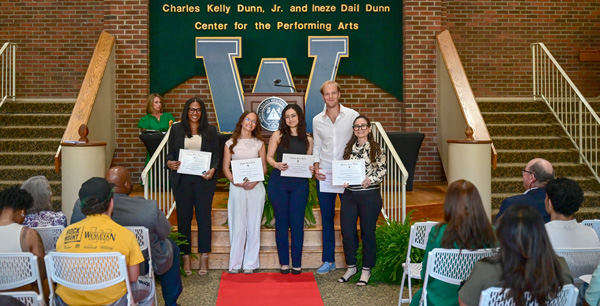
Provost Dr. Joe Lane expressed his pride in the students’ accomplishments, stating, “Our awardees and honor society members have displayed outstanding contributions both inside and outside the classroom. Their dedication and hard work are truly commendable, and we are confident that they will continue to excel in their future endeavors.”
North Carolina Wesleyan University remains committed to fostering an environment of academic excellence and leadership, and the Honors Convocation is a testament to the university’s dedication to recognizing and celebrating student achievements.
When you see these students, please take a moment to congratulate them.
To view entire 2026 honors list and photos from event, visit ncwu.edu/academics/academic-honors
Dr. Katrina Sweet Awarded Jefferson-Pilot Award
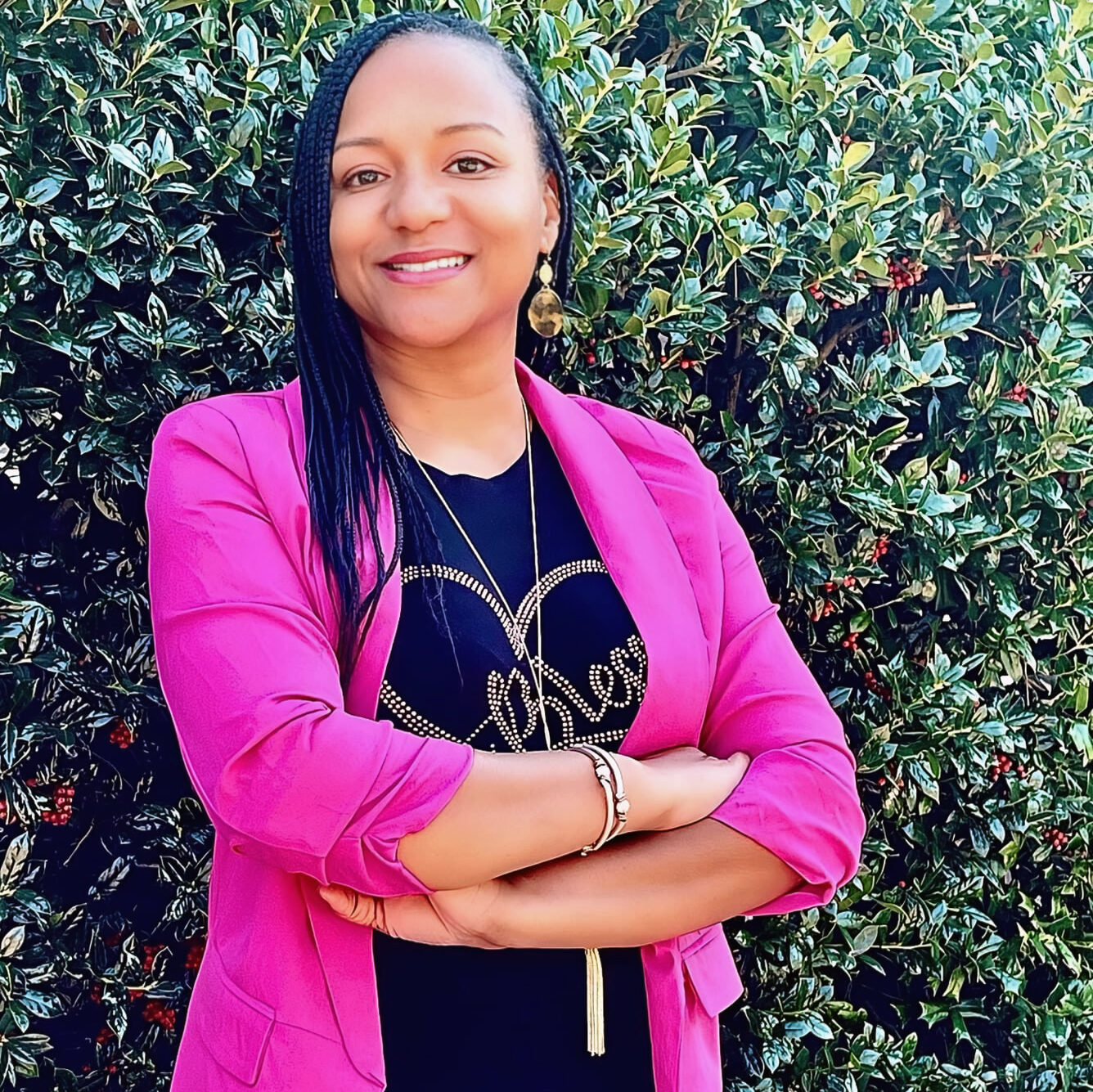
North Carolina Wesleyan University (NCWU) is proud to announce that Dr. Katrina Sweet has been selected as the 2025–2026 recipient of the Jefferson-Pilot Professorship, the University’s highest and most distinguished faculty honor. The award recognizes exceptional achievement in scholarship, teaching excellence, and dedicated service to both the campus and the greater community.
Established in 1981 through the generosity of the Jefferson-Pilot Life Insurance Company, the Jefferson-Pilot Professorship is an endowed award granted annually to a tenured faculty member who exemplifies the highest standards of professional excellence. The recipient is nominated by a committee of faculty and appointed by NC Wesleyan President Dr. Evan D. Duff. Honorees are recognized not only for mastery of their discipline and contributions to academic knowledge, but also for their unwavering commitment to student development and meaningful engagement in the life of the University.
Dr. Sweet, a respected educator and leader within the Wesleyan community, has consistently demonstrated the values embodied by this award through her work in the classroom, her scholarship, and her ongoing service initiatives.
“I was honored to be selected as the 2025–2026 Jefferson Pilot Faculty Member,” said Dr. Sweet. “This recognition made me proud to be a Bishop and grateful for the work I am called to do—preparing students to lead, serve, and transform their communities.”
For Dr. Sweet, the recognition is also deeply personal. She reflected on the influence of her family and the foundation they instilled in her long before she stepped into higher education.
“I could not help but think of my grandmother and grandfather,” she shared. “I believe I am a blend of the two of them. My grandmother was a nurturer…full of quiet strength. My grandfather was an entrepreneur and a visionary. Their legacy still lives in me, and receiving this award makes me honor who they were and what they meant to my life. Their love, their resilience, and their example guide the way I teach, lead, and serve my students and community.”
Throughout her time at NC Wesleyan, Dr. Sweet has become known for her ability to create an environment where students are both challenged and supported—an educator who not only teaches content, but also inspires confidence, purpose, and personal growth.
When asked what moments have been most meaningful during her time at Wesleyan, Dr. Sweet pointed directly to the students who have shaped her journey as much as she has shaped theirs.
“If I had to choose what has meant the most, it would be the way my students have poured into my life and believed in me,” she said. “I have had students speak prophetically over my life and see the best in me even in seasons when I struggled to see it myself… I realized that God did not just place me here for my students, but He also placed my students here for me.”
Her approach to teaching is grounded in purpose and service, principles she hopes students carry with them long after graduation.
“I want my students to remember that service is important,” said Dr. Sweet. “Serving and giving beyond oneself is something I try to model both in the classroom and in the community. Service shapes character, builds compassion, and reminds us that leadership is not about position, it is about impact.”
Dr. Sweet teaches Human Resource Management and has played a key role in strengthening student interest in the field. She shared that one of the clearest moments of realizing her impact came when students began shaping their career paths based on what they experienced in her courses.
“I absolutely enjoy teaching Human Resource Management because HR is truly the glue that holds an organization together,” she said. “I first realized the impact of my teaching when students who enrolled in my HR courses began sharing that they wanted to minor in HR and pursue careers in the field after graduation. Over time, I noticed a trend—students were entering the HR profession and then reaching back out to share their experiences, seek guidance, and continue the mentorship we built in the classroom.”
That continued connection with alumni is a reflection of Dr. Sweet’s commitment to long-term student success, and her belief that the Wesleyan experience extends far beyond the classroom.
“I get to blend my work as a practitioner with my role as an educator,” she said. “The field is evolving quickly, and bringing real world experience into the classroom helps students see how business concepts come alive in practice.”
As part of the Jefferson-Pilot Professorship, Dr. Sweet will deliver a public lecture on Thursday, April 9, focused on nonprofit sustainability and community engagement. The lecture will highlight her work in building community partnerships, developing long-term organizational impact, and connecting students to hands-on learning experiences rooted in NC Wesleyan’s three pillars: Personal, Practical, and Purpose-Driven.
Those interested in attending are encouraged to contact the University to confirm attendance and event details.
“Attendees can expect an engaging and insightful lecture focused on nonprofit sustainability and community engagement,” Dr. Sweet said. “I will share the work I have done in the community, the partnerships I have built, and the practical strategies that support long term organizational impact. I will also highlight how my students have been connected to this work and how these experiences have shaped their learning through our three pillars: Personal, Practical, and Purpose Driven.”
Dr. Sweet emphasized that the topic is especially relevant today, as students and communities alike seek meaningful solutions to real-world challenges.
“This topic matters to me because nonprofit sustainability and community engagement are at the heart of who I am as an educator, practitioner, and servant leader,” she said. “I believe deeply in the power of organizations that exist to uplift people, strengthen communities, and create long term impact. My work in this space allows me to live out my values while also giving my students real opportunities to learn, serve, and grow.”
Dr. Sweet’s selection as the 2025–2026 Jefferson-Pilot Professor reflects her exceptional contributions to the University and the lasting impact she continues to make on students, colleagues, and the broader community. Her work exemplifies the mission of North Carolina Wesleyan University—preparing students for lives of leadership, service, and purpose.
NCWU Alumnus Releases New Single
North Carolina Wesleyan University (NCWU) is proud to announce that alumnus Jackson Nethercutt ’23 has released his latest single, “These Illustrations,” which debuted March 28. The song is now available on Apple Music, Spotify, YouTube, and iTunes.
Following his graduation from Wesleyan in 2023, Nethercutt moved to Salt Lake City for a yearlong internship at the University of Utah. After completing the experience, he returned to North Carolina and began a new chapter as an elementary school music teacher near Wilmington in 2024. While the transition brought exciting opportunities, it also came with significant personal and professional adjustments.
“These Illustrations tells the story of how a relationship formed and blossomed from a friendship to a romance,” said Nethercutt. “It became an irreplicable interconnectedness created by shared hardship.”

Nethercutt shared that the first half of the song reflects his internal conflict about allowing love into his life during a time when he already felt emotionally overwhelmed. As the song progresses, it shifts toward the peace and warmth he found through the relationship, ultimately capturing the exhilaration of falling in love while navigating a difficult season of life.
In addition to its personal meaning, Nethercutt noted that the song was also his most challenging production project to date. With its extended length and complex structure, including key and time signature changes, the recording process required significant time and attention to detail. Nethercutt wrote, performed, recorded, and produced the track entirely on his own from his apartment studio.
“I did a lot of experimenting with things like unique vocal harmonies, layering eight different acoustic guitar parts in the chorus, and having two bass lines going back and forth at each other in the hook,” he explained.
Nethercutt credits his experience in NCWU’s Music Production (MUP) program for preparing him to independently produce music at a professional level. He also expressed gratitude to Tony Sawyer, Assistant Professor of Music Production and Director of 301 North Records, who helped him develop key recording and mixing skills, as well as songwriting abilities through courses such as Music Theory and History of Popular Music.
“I gained a lot of skill and experience in the MUP program at Wesleyan that allows me to be able to do it all myself instead of having to pay someone else to do it for me,” said Nethercutt.
“These Illustrations” is Nethercutt’s second release under his stage name Kneethercute, a nickname stemming from a mispronunciation of his last name that has followed him since high school. He has also released music collaboratively under the name Camp Runaway.
Looking ahead, Nethercutt is currently working on his next musical project, expected later this summer, as well as a new YouTube channel titled “A Human Adventure,” which will document his life and music in an authentic and personal way.
Fans can follow Nethercutt on social media @kneethercute to stay updated on future releases.
NCWU congratulates Jackson Nethercutt on this exciting new release and proudly celebrates the continued achievements of its alumni in the music and production industries.
NC Wesleyan Student Turns Pain into Purpose Through Published Memoir
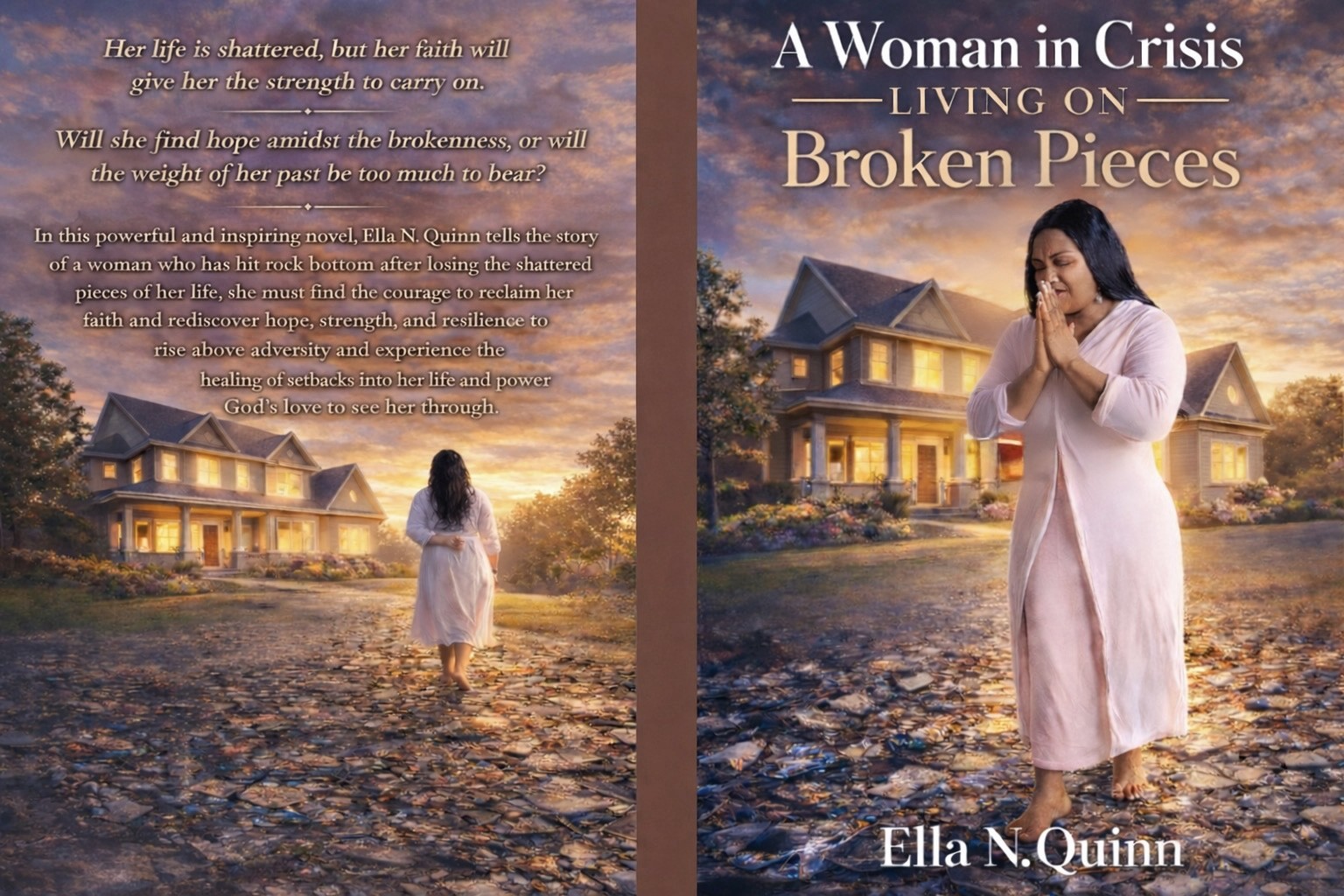
North Carolina Wesleyan University student Ella Quinn, currently pursuing a degree in Business Administration, is using her voice to inspire others through her newly released book, A Woman in Crisis Living on Broken Pieces.
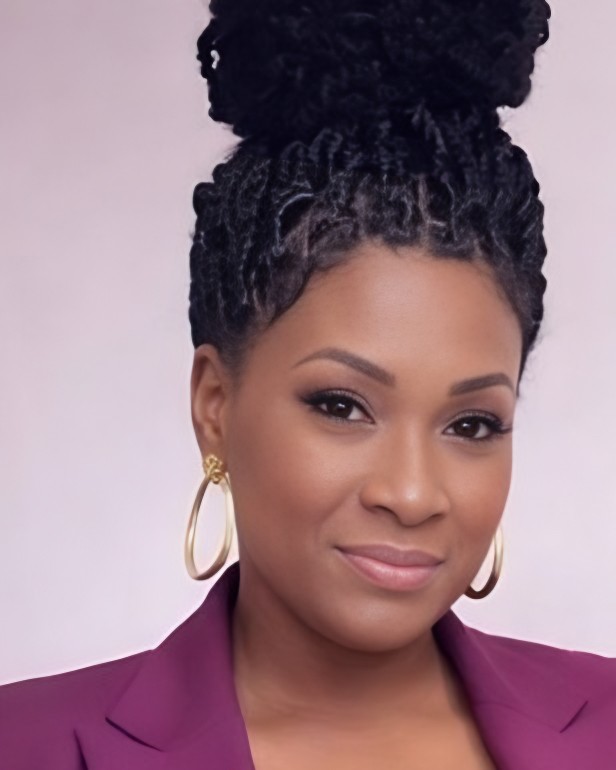
Inspired by personal life experiences, including navigating an abusive relationship, Quinn says she felt called to share her story as a message of hope for others facing hardship.
“This book came from my personal life experiences,” Quinn shared. “I felt led to share my story to bring hope, healing, and encouragement to others who may be in this situation and think there is no way out, feel broken, and/or overlooked.”
Quinn described the writing process as both emotional and healing, requiring her to revisit painful moments while also reflecting on how far she has come.
“The writing process was both emotional and healing,” she said. “It required me to revisit painful moments, but it also allowed me to see how far God has brought me.”
In addition to writing the book, Quinn also learned the publishing process firsthand—taking on formatting, designing her own cover, and navigating distribution. She credits the experience with strengthening her confidence not only as an author, but as an entrepreneur. Quinn said the moment she realized she wanted to become an author was when she understood her story had purpose beyond herself.
“I realized I wanted to become an author when I understood that my story was not just for me; it was meant to help others,” she said.
Through her book, Quinn hopes readers recognize that healing is possible—even in the most difficult circumstances.
“I want readers to know that no matter how broken their situation may seem, they are not beyond restoration,” she said. “There is healing, there is purpose, and there is still life after crisis.”
Quinn also shared how her experience at NC Wesleyan has supported her growth as she balances academics and personal goals.
“My time at NCWU has strengthened my leadership skills, discipline, and confidence,” she said. “The program has helped me grow both personally and professionally, giving me the structure and encouragement needed to pursue my goals, including becoming a published author.”
For students who may dream of writing or publishing a book, Quinn encourages them to begin now rather than waiting for the “perfect moment.”
“Start writing and don’t wait,” she said. “Your story matters, and someone needs to hear what you have to say. Stay consistent, be willing to learn the process step-by-step, and believe in your voice.”
Quinn says her greatest accomplishment is having the courage to share her truth.
“This book represents healing, strength, and obedience to what I believe God placed in my heart to do,” she said.
Her book, A Woman in Crisis Living on Broken Pieces, is available for purchase on Amazon and through her website at ellanquinnauthor.com.
Looking ahead, Quinn plans to continue growing her author brand, “Her Voice His Glory,” while expanding her speaking and ministry platform. She is also preparing future writing projects, including a workbook and a new book titled Your Brokenness Was Necessary.
NCWU Hosts 2026 Omnium Conference
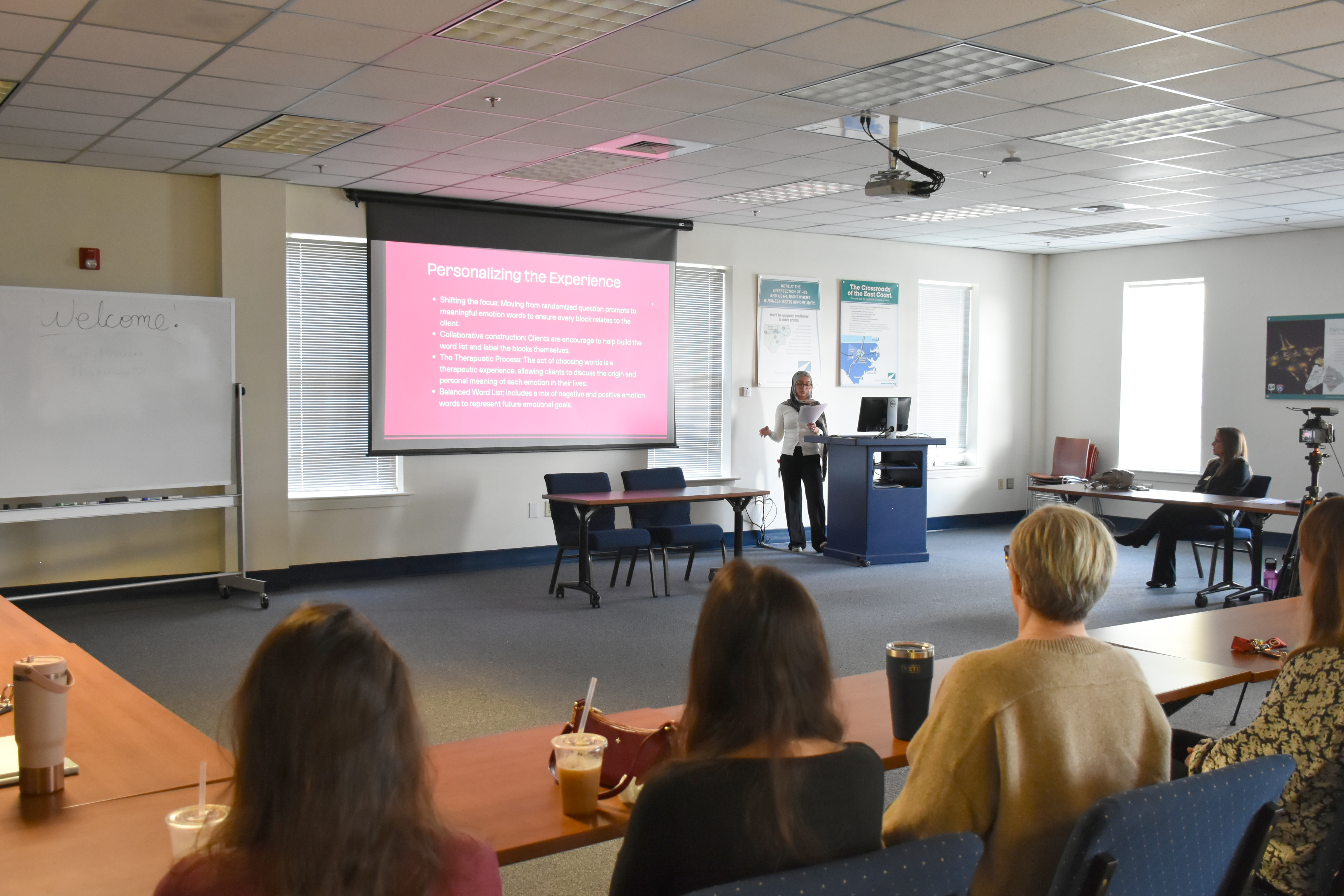
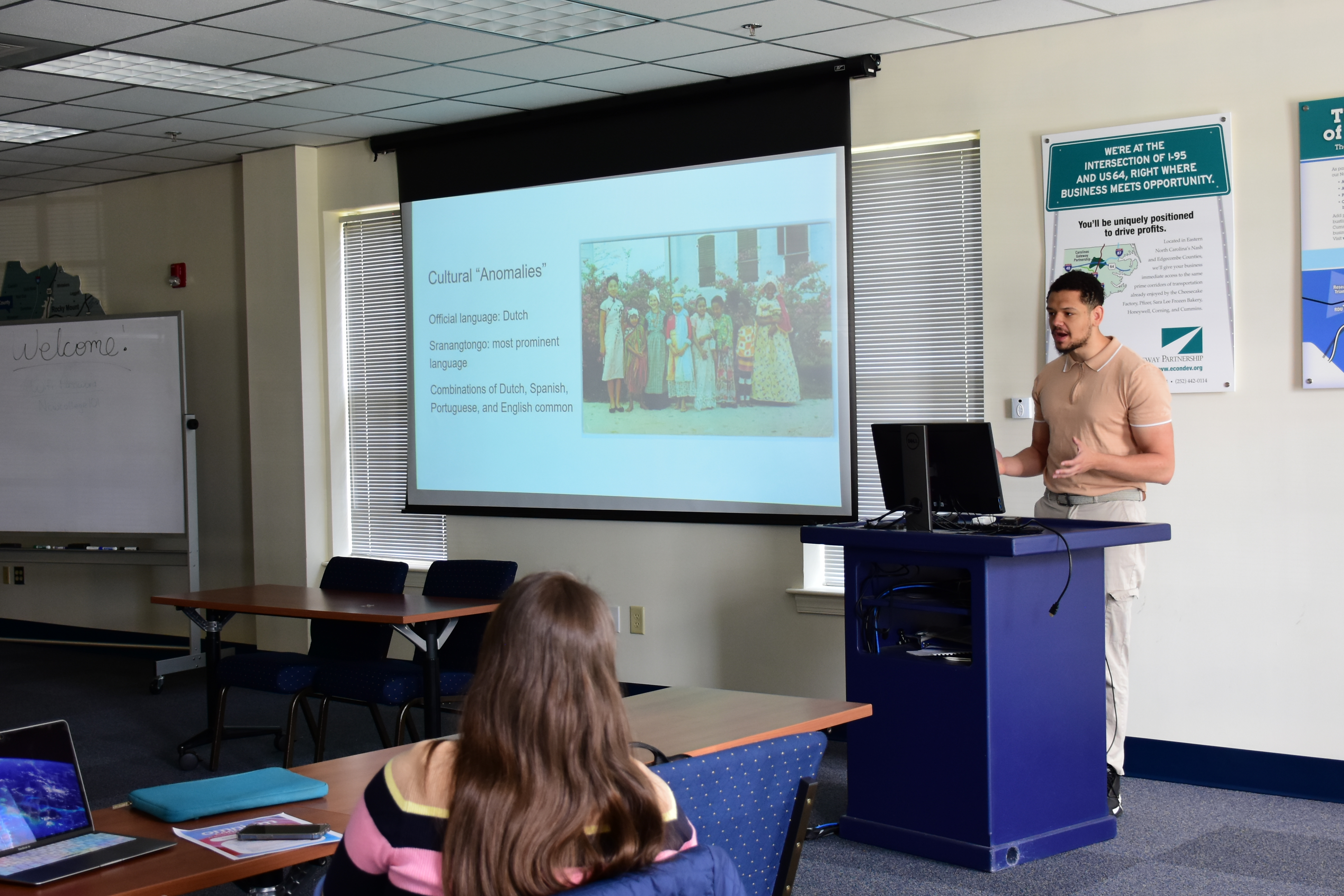
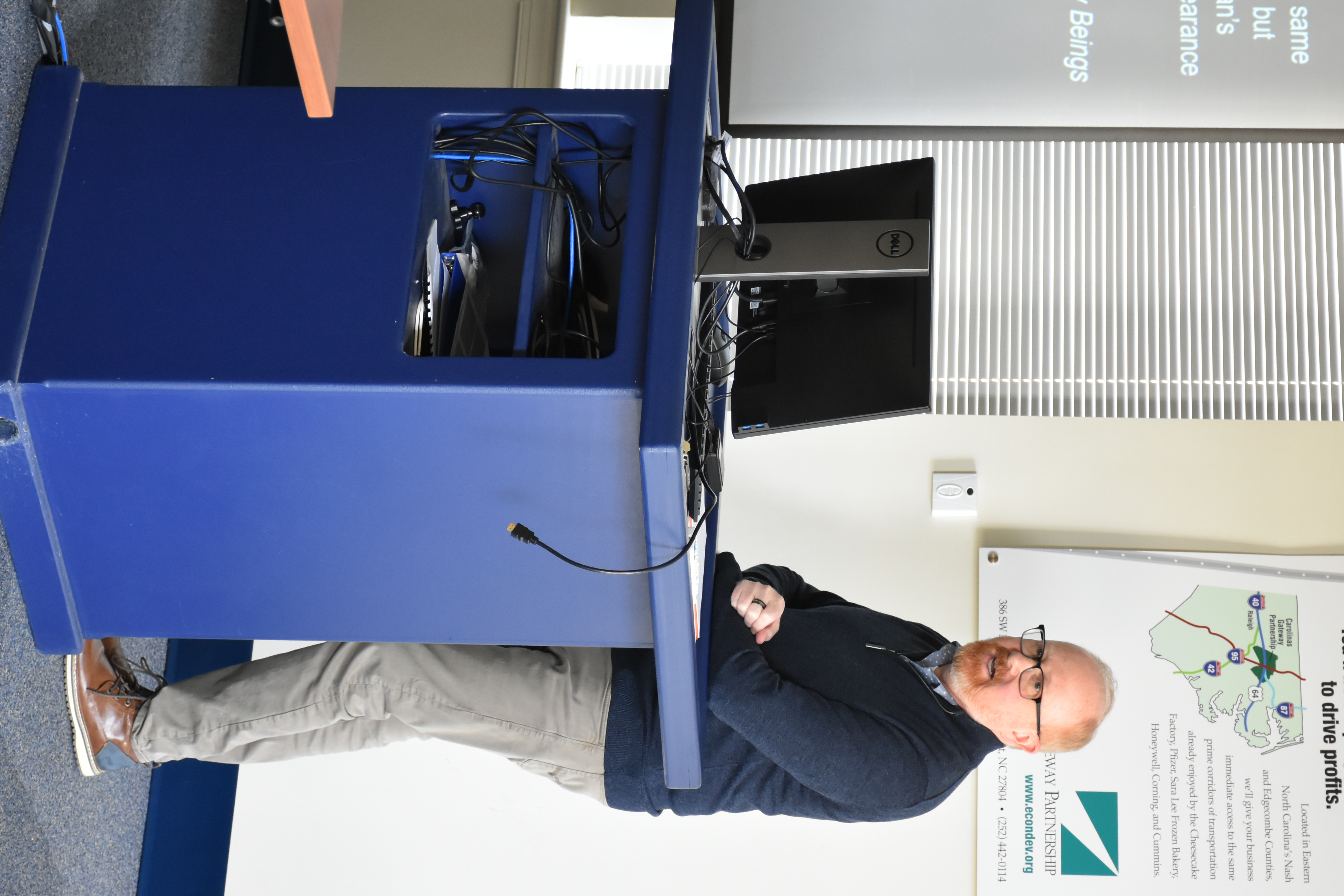
North Carolina Wesleyan University (NCWU) held the second annual Omnium Conference on Wednesday, March 25 at the Gateway Technology Center on campus. The event spotlighted undergraduate research and celebrated scholarly achievement across disciplines.
What is The Omnium Conference?
The Omnium Conference is a formal presentation of student research papers in affiliation with Omnium: The Undergraduate Research Journal at NCWU. Omniumis a Latin word meaning “everything”, and the journal provides students with the opportunity to explore major genres of academic writing, join in scholarly conversations, share their ideas, perform original research, and see their work published in a professional venue. Now in its eighth year, Omnium was established in 2019 by Dr. Doreen Thierauf, Associate Professor of English and General Education Program Coordinator. Dr. Thierauf serves as the journal’s editor and as conference co-organizer, joined by Dr. Shane Thompson, Associate Professor of Bible and the Ancient Near East and Director of the Office of Undergraduate Research.
“Omnium provides a professional platform for students to engage in original research, participate in academic dialogue, and see their work published,” said Dr. Thierauf. “It also serves as a teaching tool for faculty at NCWU and other institutions, with articles reflecting the academic growth of students at every stage of their college careers from first-year composition essays to projects created in senior seminars and honors theses”.
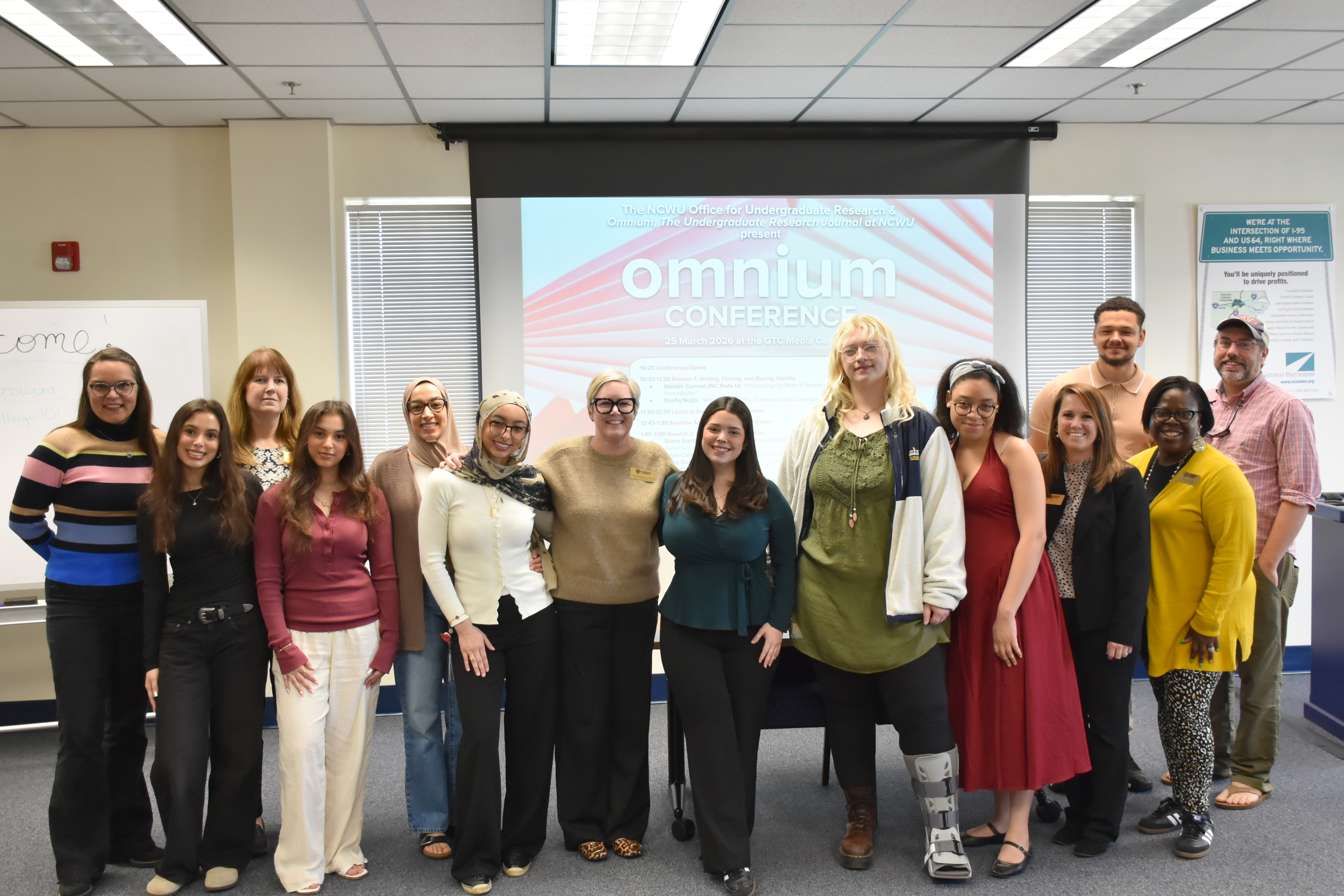
2026 Conference Details
The 2026 conference featured six student presentations, organized into two thematic sessions followed by interactive panel discussions:
- Session 1: Writing, Filming, and Buying Identity
- Alastair Cannon (NC State U): “Disproving the Myth of Simplicity in Anatolian Hieroglyphs”
- Shafiq Nuijts: “Wan Pipel: Identity, Tolerance, and Coexistence in Suriname”
- Session 2: Healing Our Communities
- Niana Gunther: “Lessons Learned from Unexpected Results: Investigating Herbal Remedies and Probiotic Growth”
- Kayla Collins: “Stress, Sleep, and Mental Wellbeing among NCWU Students”
- Maya Dari: “Building Resilience: One Jenga Block at a Time”
- Maria Gabriela Salazar: “Factors Influencing the Development of Cultural Competence in Nurses”
This year’s keynote address was delivered by Dr. Lee Templeton, Professor of English and Chair of the School of Humanities. His presentation was titled “The Dragons of Higher Education.”
The 2026 conference marked an ongoing collaboration between Dr. Thierauf and Dr. Shane Thompson. Together, they aim to expand Omnium’s mission to highlight the exceptional work being produced by NCWU undergraduates across all disciplines. The organizers were thrilled to feature a student from North Carolina State University, Alastair Cannon, in the conference lineup and hope to attract more students from regional campuses to the conference in the years to come.
Photos from this event can be viewed: Omnium Research Conference 03/25/26 – ncwesleyan
First Year to Doctoral Success
One of life’s most challenging questions is, “What do I want to be when I grow up?” For many, the answer is not only about choosing a path, but also understanding the steps, time, and dedication required to achieve it—while still finding joy in the journey and a community that supports you along the way.
At North Carolina Wesleyan University (NCWU), that sense of community is at the heart of the student experience. From the first campus visit to graduation and beyond, students are surrounded by mentors, faculty, and peers who are deeply invested in their success—personally and professionally.
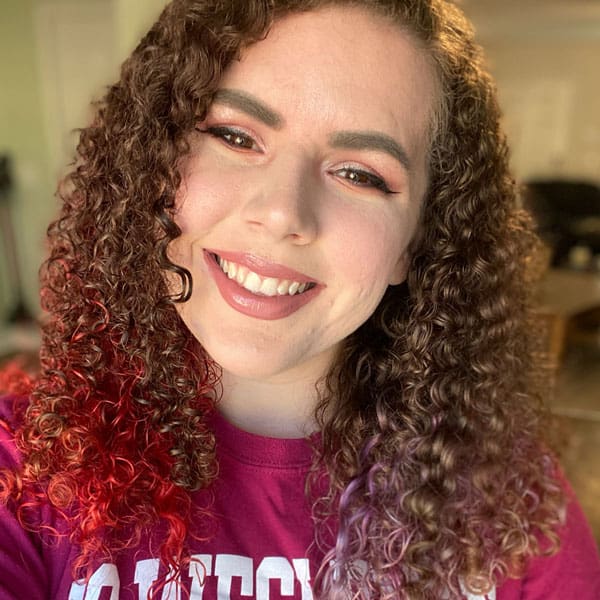
For Dr. Caitlin Brabblerose ’18, that support system proved transformative. A double major graduate in Biology and Environmental Science, Brabblerose recently reached a significant milestone: successfully defending her doctoral dissertation. Her journey is a testament to the power of personalized education and meaningful mentorship.
“Wesleyan provided me with such a unique undergraduate experience that prepared me in ways I never anticipated for graduate school,” said Brabblerose.
Post-Undergrad Applied Learning Experience
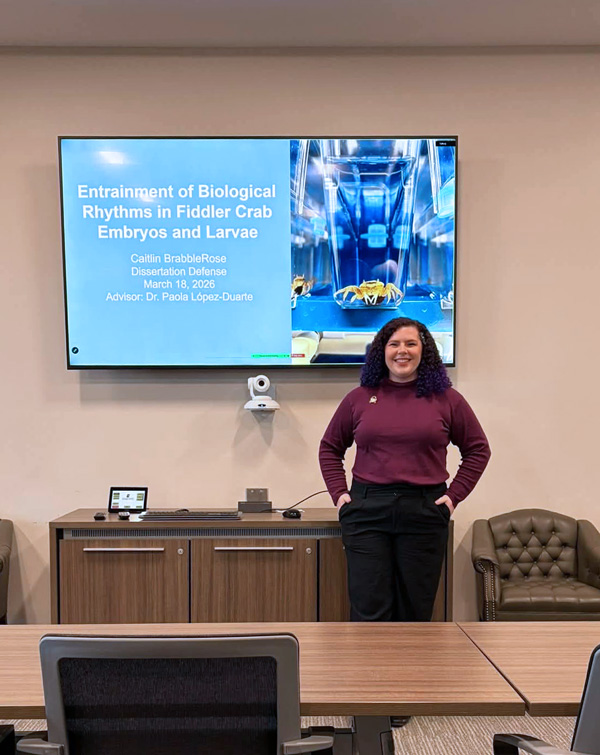
After graduating in 2018, Brabblerose began her career as a Laboratory Technologist with LabCorp, working in Genomics and Toxicology. She later pursued her Master of Science in Biology at the University of North Carolina at Charlotte, eventually continuing into the Ph.D. program, where she spent more than five years studying the biological rhythms of intertidal organisms.
Her dissertation, Entrainment of Biological Rhythms in Fiddler Crab Embryos and Larvae, explored the complex internal clocks that guide these organisms, including circadian and circatidal rhythms. Through behavioral, molecular, and chemical research, her work contributes to a longstanding body of scientific knowledge dating back more than a century.
Reflection and Relationships
While her research is impressive, Brabblerose credits much of her success to the foundation built at Wesleyan. She explained that the small class sizes created high expectations, and her professors consistently pushed her to work harder and achieve more. The writing‑intensive courses prepared her for the reality that science involves communication as much as discovery.
She encourages students to take advantage of small class sizes and to get to know their professors, noting that they are the ones who will advocate for students, write recommendation letters, and continue to offer support long after graduation.
Her experience in the Taylor-Crocker Honors Program further mirrored the demands of graduate school, culminating in an undergraduate thesis defense that foreshadowed her doctoral journey.
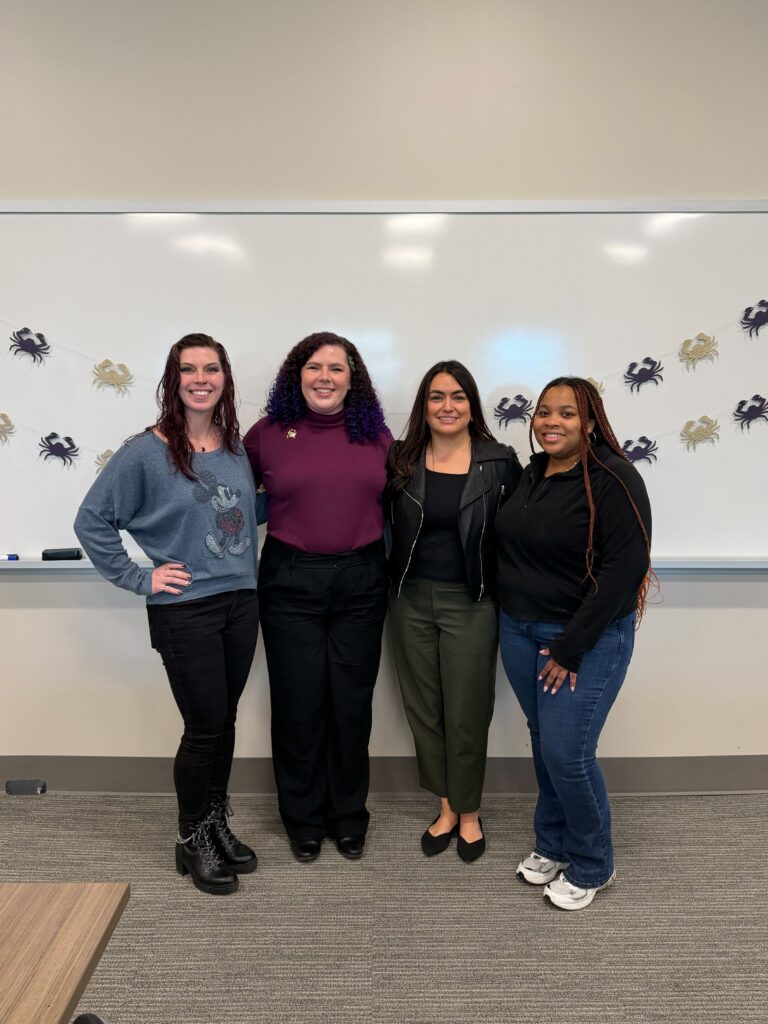
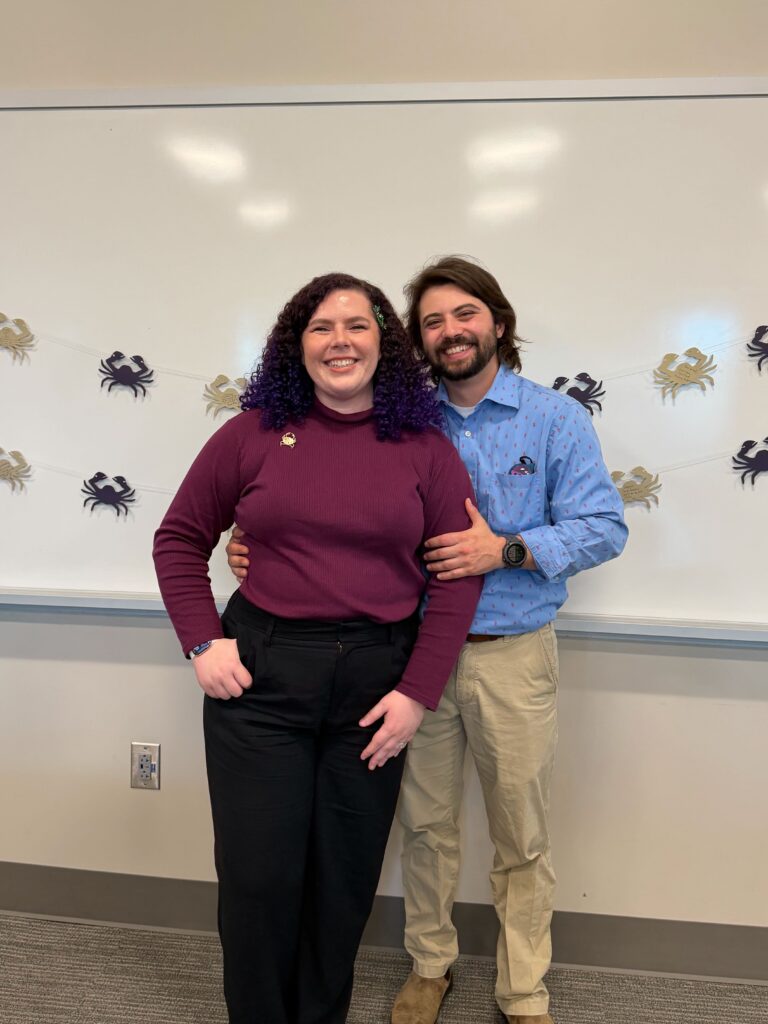
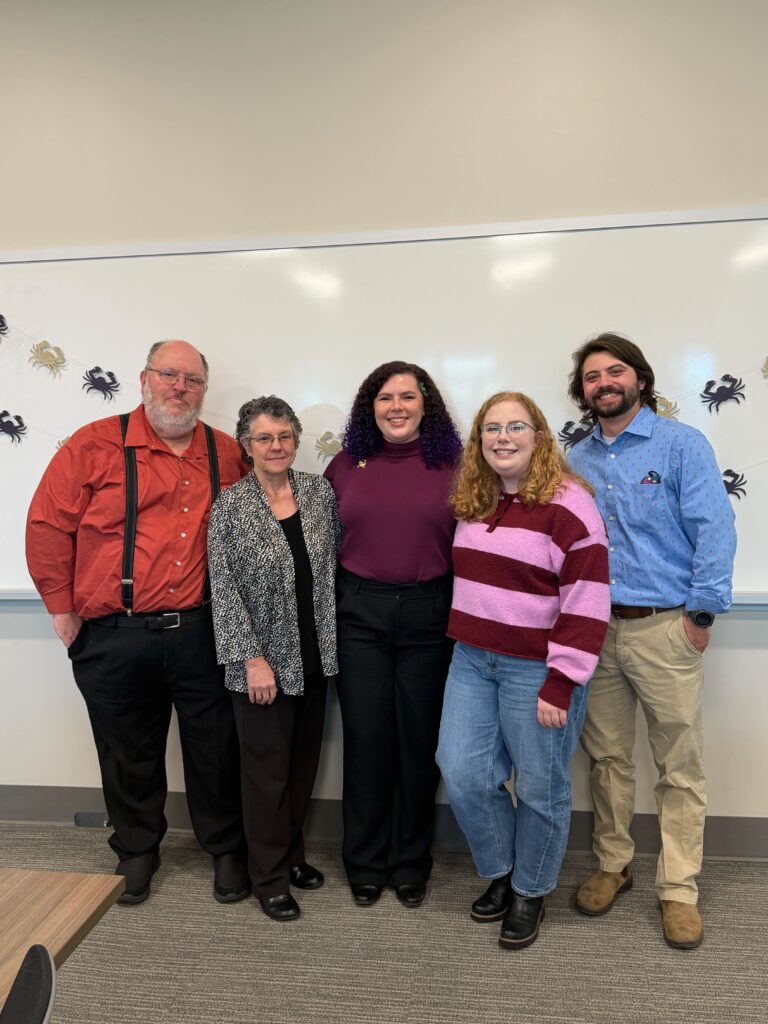
That support came full circle when several of her former professors attended her dissertation defense—a moment Brabblerose describes as both meaningful and surreal. She shared that having the same professors who supported her honors thesis being present at her Ph.D. completion made the experience feel complete, as though everything had come full circle.
What’s next?
Now, as she looks ahead, Brabblerose plans to continue her journey in academia, pursuing postdoctoral opportunities with the long-term goal of becoming a principal investigator. She hopes to combine her passions for research, teaching, and outreach to inspire future generations. Caitlin’s goal is to give back to students the same way her professors gave and to share her story as a powerful reminder that success is not achieved alone—it is built through community, mentorship, and the willingness to embrace every step of the journey.
At NCWU, that journey doesn’t end at graduation. It continues to be shaped by relationships, fueled by opportunity, and celebrated through the accomplishments of its alumni.
NCWU Hosts Regional Science Olympiad
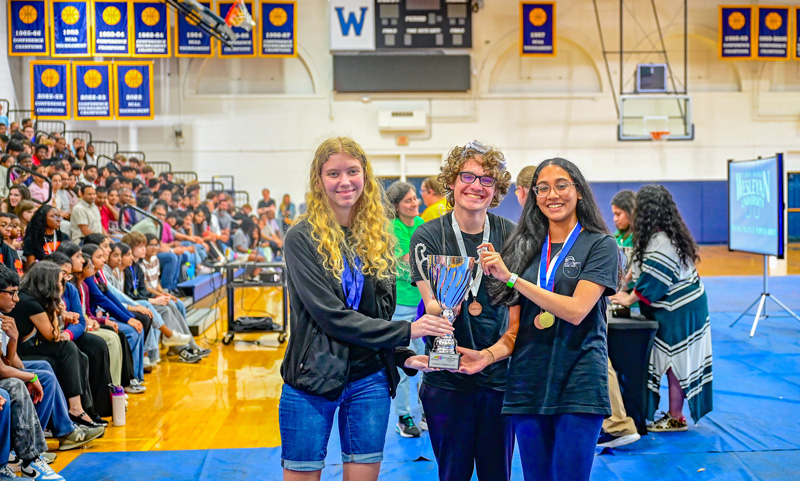
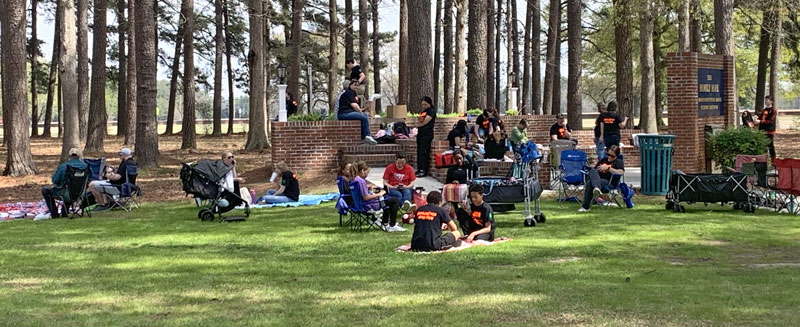
North Carolina Wesleyan University (NCWU) proudly hosted a Regional Science Olympiad competition on campus this past Saturday, welcoming more than 300 middle and high school students for a day of hands-on, competitive STEM events.
A total of 27 teams from 15 schools participated in the event, showcasing their knowledge and skills across a variety of science, technology, engineering, and mathematics disciplines. The competition featured two divisions: Division B (Middle School) with 6 schools and 11 teams, and Division C (High School) with 9 schools and 16 teams.
The event was coordinated by Brittany Al Attabi, NCWU Visiting Instructor of Biology and Chemistry, whose leadership helped bring together a dynamic and engaging experience for all participants.
“The Science Olympiad participants are passionate about the STEM disciplines and are fierce competitors,” said Al Attabi. “Their hard work throughout the school year was evident in their participation. We loved having such a large number of science-minded students on campus and hope to continue to bring this event back in the future.”
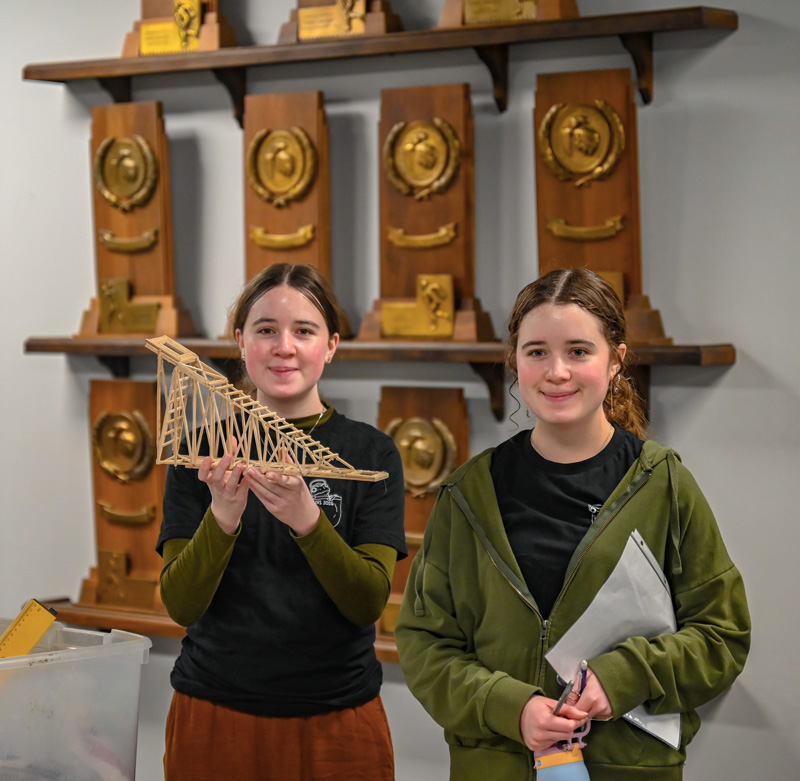
Students competed in a wide range of events, from hands-on engineering challenges to knowledge-based scientific exams, fostering both collaboration and innovation.
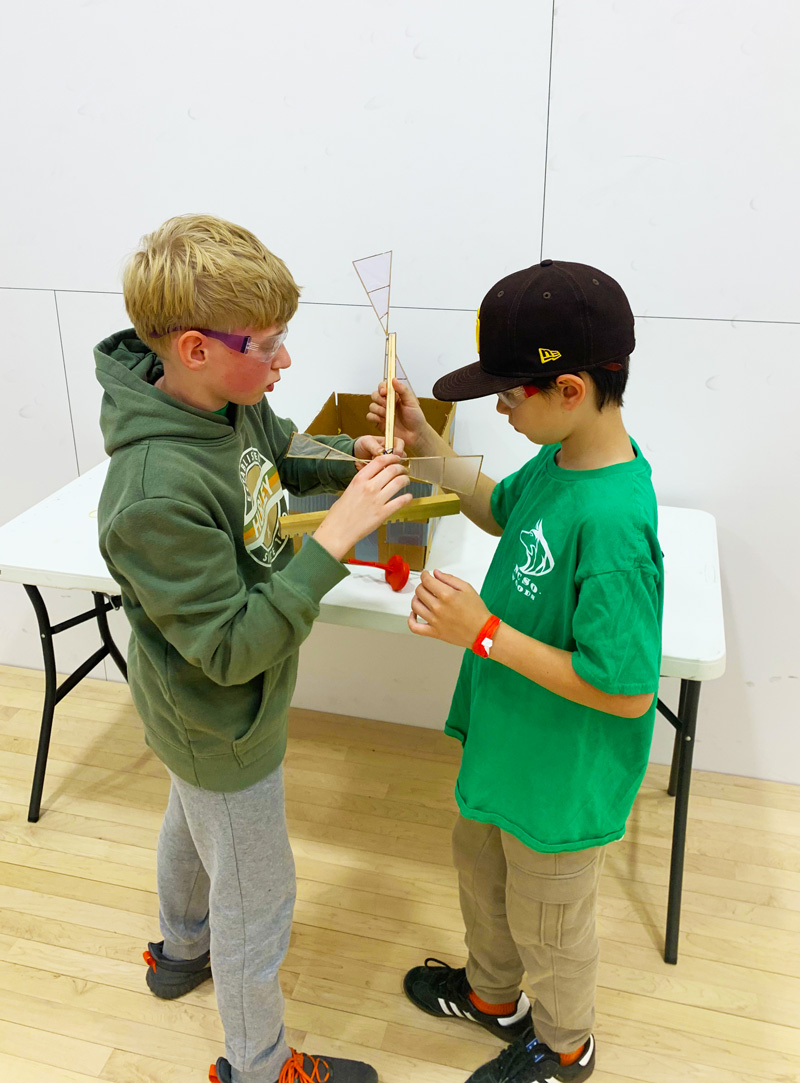
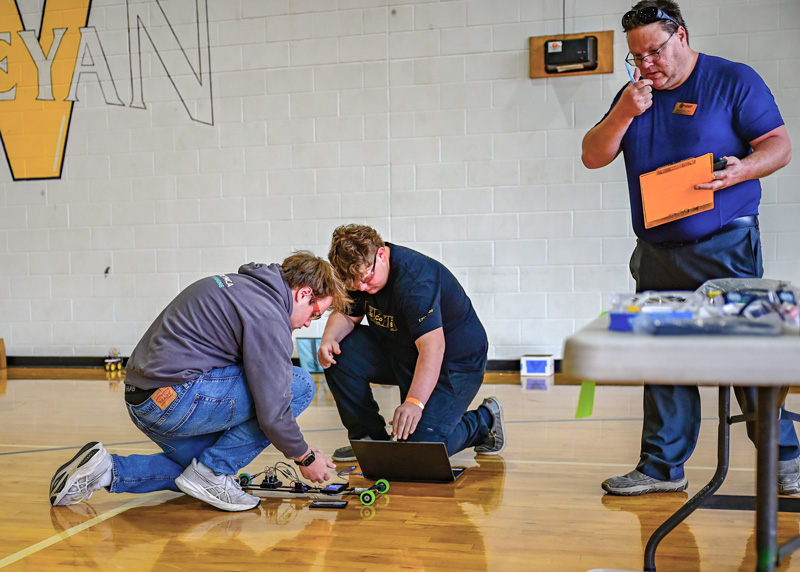
Dr. Joseph H. Lane, Jr., Provost and Senior Vice President for Academic Affairs, emphasized the significance of the event. “Professor Al Attabi really should be commended for bringing such an extraordinary group of young people to our campus and providing them with this opportunity to practice science in a fun but competitive environment,” said Lane. “The enthusiasm and ingenuity of these students is an inspiration, and we hope that they will take what they have learned in practicing for and competing in this event forward into future scientific discoveries.”
Competition Results:
Division B – Middle School
Junior Varsity:
1st Place – Alston Ridge Middle School JV1
2nd Place – Alston Ridge Middle School JV2
Varsity:
1st Place – Alston Ridge Middle School
2nd Place – Woods Charter School
Division C – High School
Junior Varsity:
1st Place – Apex Friendship High School JV1
2nd Place – The Epiphany School of Global Studies JV1
Varsity:
1st Place – Needham B. Broughton High School
2nd Place – Woods Charter School
NCWU looks forward to continuing to host events like the Science Olympiad that inspire the next generation of scientists, researchers, and innovators while strengthening connections with schools and communities across the region.
NCWU Students Gain Supply Chain Insight Through Amazon Facility Tour
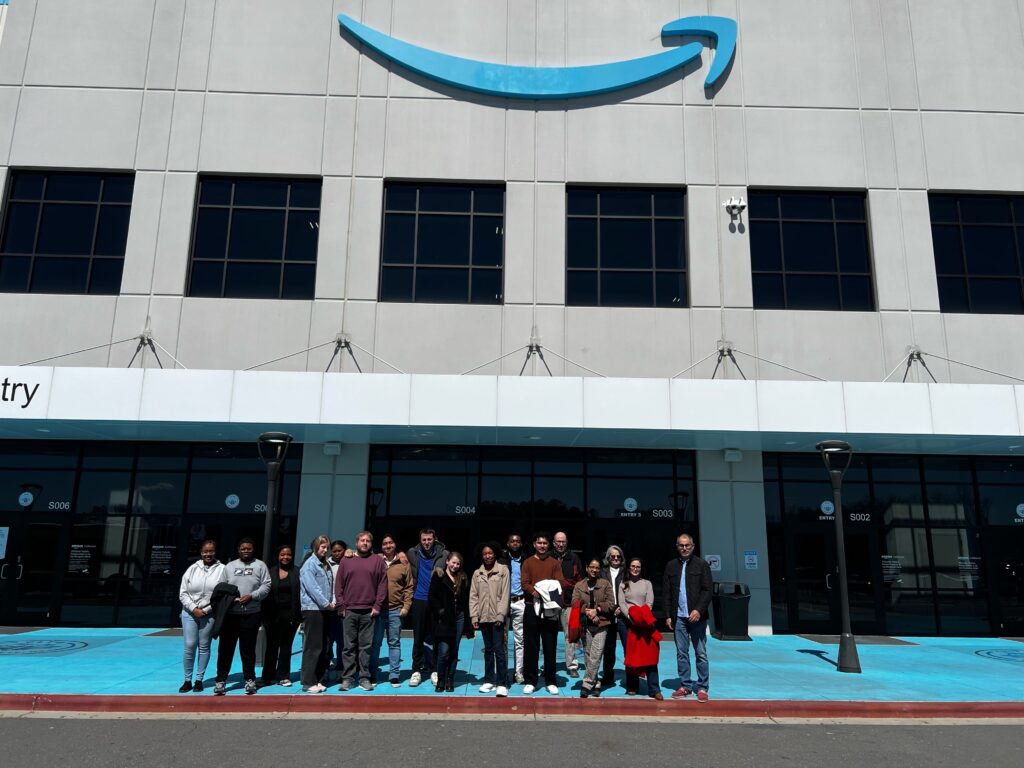
ROCKY MOUNT, NORTH CAROLINA – On Wednesday, March 18, North Carolina Wesleyan University (NCWU) traveled to Charlotte, North Carolina, for a tour of Amazon’s CLT4 Distribution Facility, gaining a firsthand look at one of the most recognizable and sophisticated logistics operations in the world.
The visit was especially meaningful for NCWU students studying Supply Chain Management, Logistics, and related business disciplines. By stepping inside a major distribution environment, students were able to connect classroom learning with the realities of modern warehousing, distribution, operational flow, and large-scale supply chain execution.
Experiences like this reflect the core educational philosophy of NC Wesleyan: preparing students through education that is personal, practical, and purpose driven. At NC Wesleyan, learning is designed to go beyond textbooks and lectures by giving students meaningful opportunities to engage directly with industries, workplaces, and professionals in the field.
Hands-On Learning
For students pursuing careers in supply chain and logistics, field experiences such as the Amazon tour are especially valuable. They help students better understand how concepts such as transportation, distribution, inventory flow, process efficiency, and operations management function in a real-world setting. These opportunities also help students see how their coursework can translate into tangible career paths in a fast-moving and highly relevant sector of the economy.
North Carolina Wesleyan University’s School of Business & Professional Studies is committed to providing students with an education that blends academic rigor with practical application. Through strong faculty mentorship, industry-relevant programs, and hands-on learning opportunities, the University works to ensure that graduates are not only knowledgeable, but also career-ready and confident in applying what they have learned.
The Amazon facility visit serves as another example of NCWU’s commitment to creating transformative learning experiences that help students discover purpose in their education and confidence in their future. For a university with a growing interest in Supply Chain Management and Logistics, opportunities like this reinforce the importance of exposing students to real operational environments where strategy, technology, and execution come together.
At NC Wesleyan, these experiences are not extras; they are part of the institution’s broader mission to develop graduates who are prepared to lead, contribute, and thrive in today’s business world.
Learn more about our Supply Chain Management program and how it can open up new roads for you in your career.
Wesleyan Hosts Golden LEAF Scholarship Luncheon
ROCKY MOUNT, NORTH CAROLINA – North Carolina Wesleyan University (NCWU) proudly hosted the Annual Golden LEAF Foundation Luncheon on March 19 at The Dunn Center, celebrating a strong and enduring partnership that began in 2003. The event honored both past scholarship graduates and current recipients, highlighting the meaningful impact of the Golden LEAF Foundation (GLF) on student success.
The luncheon opened with remarks from NCWU President Dr. Evan D. Duff and Vice President of Advancement Mark Hinson, who expressed gratitude for the Foundation’s continued support. Both emphasized the vital role GLF plays in expanding educational opportunities and advancing the university’s mission.
Four-year Golden LEAF Scholarship recipient Benjamin Sellers ’26 reflected on his journey at Wesleyan, sharing how the scholarship shaped both his academic and personal growth. He credited NCWU and GLF for his success, including publishing two articles and graduating debt-free this May. Sellers noted that while he initially planned to pursue a career in chiropractic care, the connections and opportunities he discovered at Wesleyan opened doors to new possibilities.
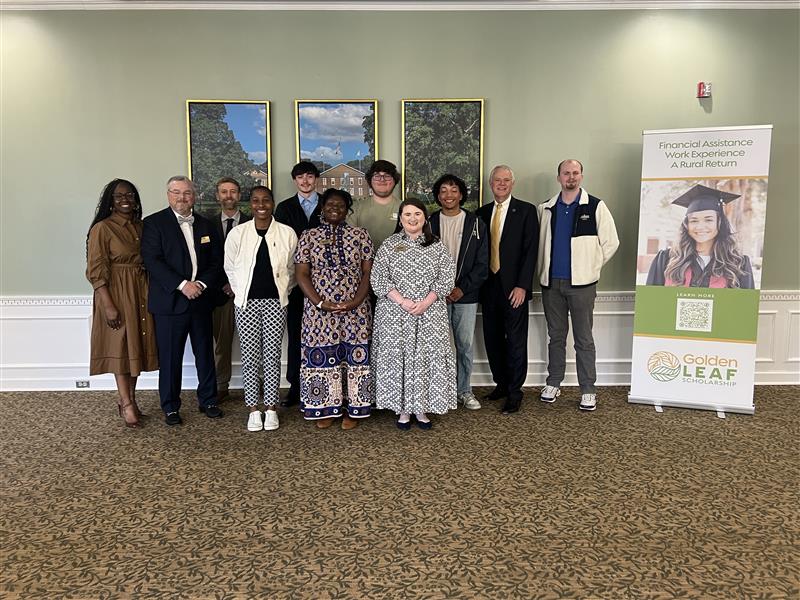
Leah Hill, NCWU’s Director of Financial Aid, recognized and introduced the scholarship recipients, offering personal thanks to GLF members for their generosity. As a token of appreciation, the university presented gifts to Foundation representatives. Scholarship recipients in attendance included Benjamin Sellers, Finnegan Allen, Joseph Cooper, and Malachi Hayes. Other recipients include Nyasia Jones, and Amanda Layton.
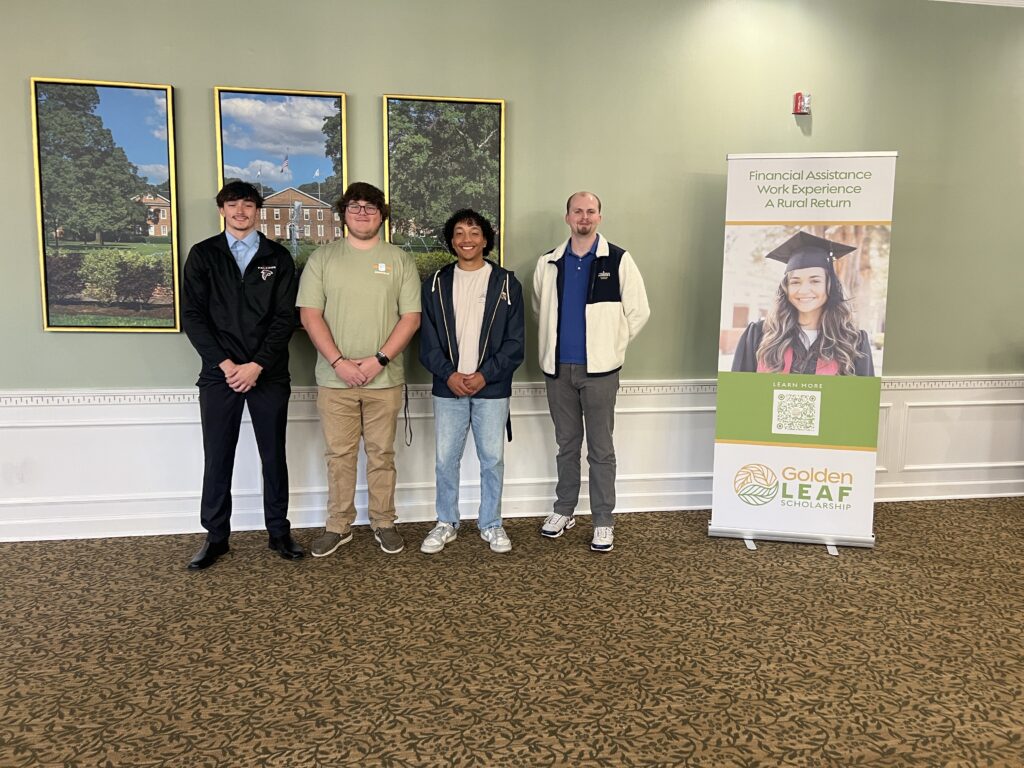
The program concluded with remarks from GLF President Scott Hamilton, Scholarship Program Manager Arlena Dongilli, and President Duff, each reaffirming the strength and impact of the partnership. Hamilton shared, “We love watching our scholarship recipients grow. These scholarships are about more than education—they support the transformation of rural communities, and the impact students make when they return home.”
Through this ongoing collaboration of 23 years and counting, NCWU and the Golden LEAF Foundation continue to empower students, foster academic achievement, and invest in the future of North Carolina’s workforce.
About Golden Leaf Foundation
Golden LEAF’s mission is to increase economic opportunity in North Carolina’s rural, tobacco-dependent, and economically distressed communities through leadership in grantmaking, collaboration, innovation, and stewardship as an independent and perpetual foundation.
The Golden LEAF Foundation is a nonprofit organization established in 1999 to receive a portion of North Carolina’s funding from the 1998 Master Settlement Agreement with cigarette manufacturers. For 25 years, Golden LEAF has worked to increase economic opportunity in North Carolina’s rural and tobacco-dependent communities through leadership in grantmaking, collaboration, innovation, and stewardship as an independent and perpetual foundation.
Golden LEAF has provided lasting impact to tobacco-dependent, economically distressed, and rural areas of the state by helping create 68,000 jobs, more than $780 million in new payrolls, and more than 98,000 workers trained or retrained for higher wages.
Governed by a board of directors appointed by leaders of NC’s legislative and executive branches, Golden LEAF has focused on critical issues facing North Carolina communities including bringing jobs and building industry by providing resources to communities, awarding scholarships to local students and administering the state’s relief efforts following natural disasters.
About North Carolina Wesleyan University
North Carolina Wesleyan University (NCWU) is a small, private Methodist-affiliated institution with a liberal arts-based core curriculum that prepares students for professional advancement, life-long learning and responsible participation in their communities. NCWU offers liberal arts, professional and graduate degree programs for traditional, transfer and working-adult students.
NCWU offers a best-in-class value and a personally tailored private higher education experience. We invest in each and every student we accept by providing individualized awards, scholarships and grants. Wesleyan is YOUR hometown University that is Personal. Practical, and Purpose-Driven. With students from all over the United States and more than 40 different countries, the University has immense cultural diversity. In addition to its educational mission, NCWU serves as a vital economic engine for the region, contributing over $209 million to the local economy.
To learn more, visit ncwu.edu and follow on Facebook, LinkedIn, TikTok and Instagram.
Teacher Education Wesleyan Experience
North Carolina Wesleyan University (NCWU) continues to prepare the next generation of educators through its dedicated Teacher Education program, where students gain the knowledge, mentorship, and real-world experience needed to make an impact in the classroom.
Recently, two pre-service teachers in the program — Kathlene “Brooke” Rose and Kayden Comerford — shared their experiences studying Elementary Education at Wesleyan and reflected on how the University is helping prepare them for their future careers as licensed teachers.
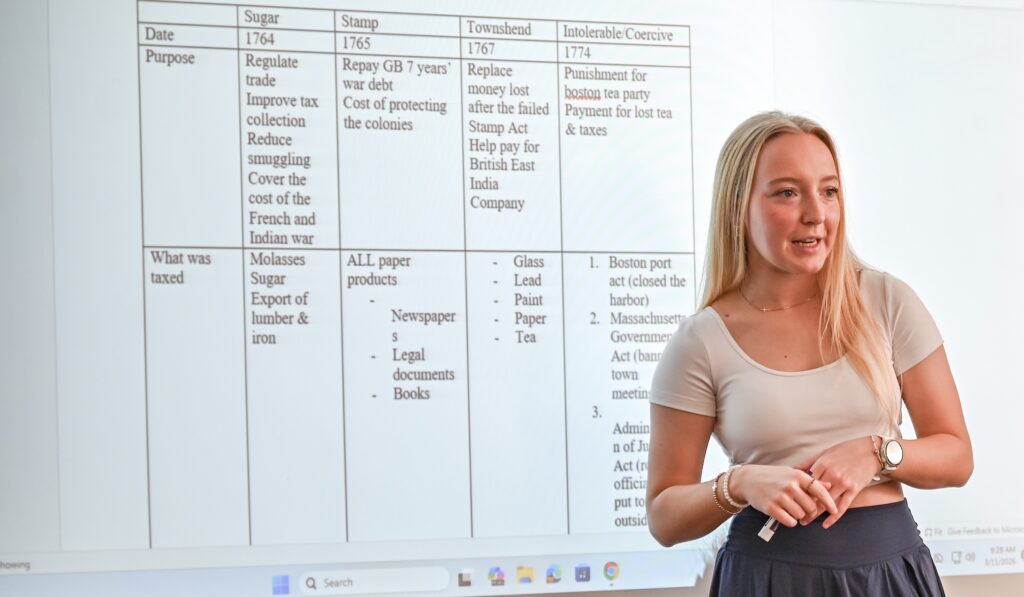
Rose, a native of Nash County who recently transferred from East Carolina University, says she quickly found a sense of belonging on campus.
“Wesleyan feels like home,” Rose shared. “There is nowhere I would rather be as I learn to become a practicing licensed teacher.”
Comerford, who is originally from Apex, North Carolina and previously lived in Loudoun County, Virginia, emphasized the supportive learning environment that defines the Wesleyan community.
“Wesleyan is a tightknit community where I feel that all parties want the other to succeed,” said Comerford.
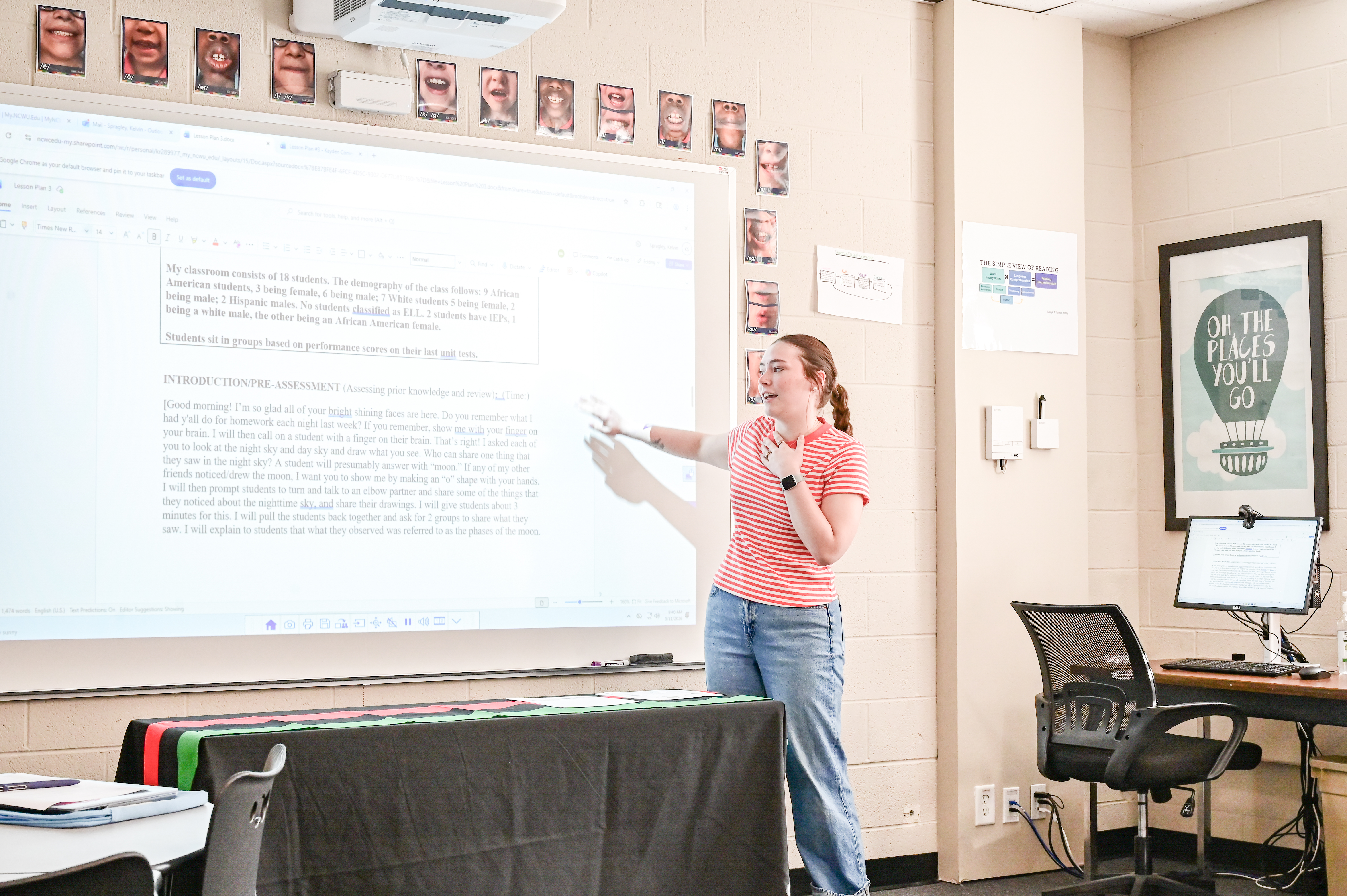
According to Dr. Kelvin Spragley, Director of Teacher Education at NCWU, the program is designed to equip students with both the academic foundation and hands-on classroom experience needed to succeed as educators.
“Preparing effective teachers requires more than coursework,” said Spragley. “Our students engage in meaningful field experiences and mentorship opportunities that allow them to build confidence, develop instructional skills, and understand the real needs of today’s classrooms.”
Wesleyan’s Teacher Education program prepares students for licensure in elementary education while emphasizing leadership, service, and community engagement. Through close faculty mentorship and partnerships with local schools, students graduate ready to step into classrooms and make a difference in the lives of their students.
As future educators like Rose and Comerford continue their journeys, Wesleyan remains committed to supporting students who feel called to teach and inspire the next generation.
