



From the elementary classroom to community health initiatives, Kailyn St. John is discovering how a Master of Public Health can open doors to meaningful work while making a difference in the lives of others.
When Kailyn St. John decided to pursue her Master of Public Health (MPH), she knew she wanted to build on her interest in health and wellness. What she didn’t know was just how many ways public health would connect to her everyday life.
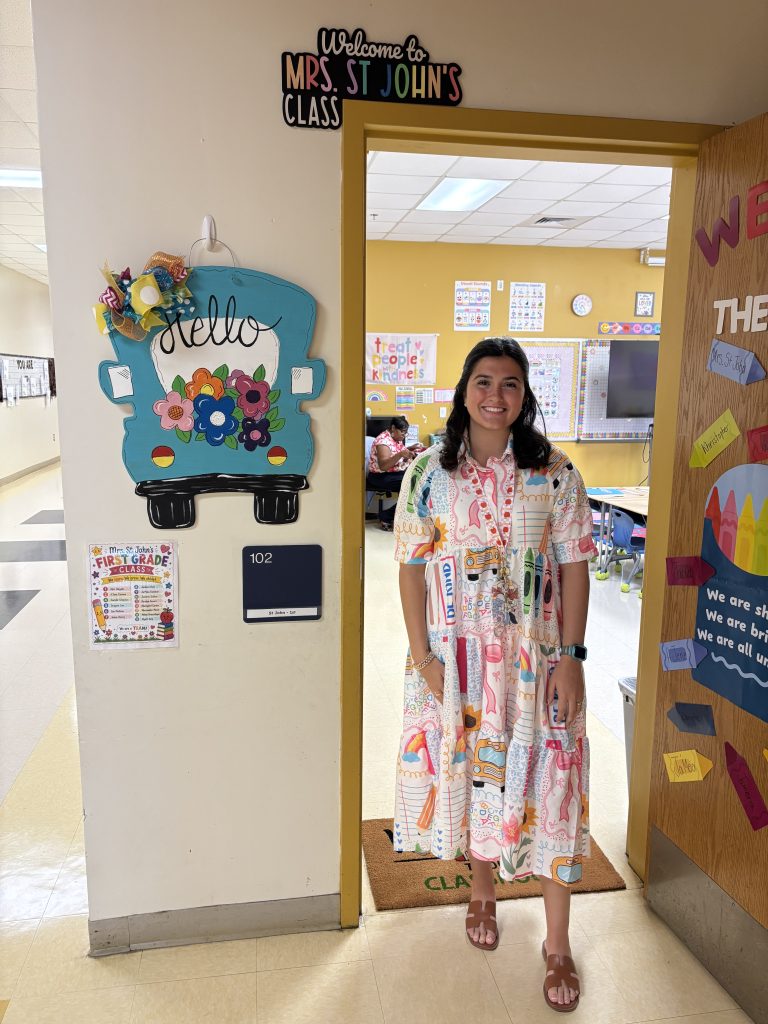
Originally from Hinsdale, New Hampshire, St. John graduated from Keene State College in May 2025 with a bachelor’s degree in Health Sciences before beginning her graduate studies at North Carolina Wesleyan University. Today, she balances several responsibilities: working as a first-grade teacher in Kinston, serving as a graduate assistant for NC Wesleyan’s MPH program, and completing a public health internship with Carteret County Health and Human Services.
It’s a full schedule, but St. John is working toward a goal that matters to her: helping people and communities live healthier lives.
“I would never say that it is easy, but it is possible,” St. John said of balancing graduate school with a busy life. “If earning the degree is something that is truly important to you, being busy does not automatically mean you cannot do it.”
Connecting the Classroom to Community Health
St. John chose NC Wesleyan’s MPH program in part because of its flexibility and its concentration in Physical Activity and Health, an area that first captured her interest during her undergraduate studies.
The online format allowed her to continue her education while gaining professional experience. Just as importantly, she found a program where she could build meaningful relationships with professors and classmates, even from a distance.
“I never expected to feel as connected as I do to an online graduate program, but NC Wesleyan has given me that experience,” she said.
Through her studies, St. John has also discovered that public health extends far beyond hospitals and healthcare facilities. In her first-grade classroom, she sees how nutrition, physical activity, emotional well-being, access to resources, and family circumstances can affect a child’s ability to learn and thrive.
Her internship provides another perspective, allowing her to gain hands-on experience with community health initiatives, health promotion, outreach, and connecting people with programs and resources.
Together, these experiences have changed the way she thinks about health.
Rather than focusing only on individual choices, St. John has learned to consider the circumstances surrounding them, including access to healthcare, transportation, income, healthy food, and opportunities for physical activity.
That broader perspective is one she plans to carry throughout her career.
A Degree That Opens More Than One Door
For St. John, one of the most valuable parts of earning an MPH is discovering how many directions a career in public health can take.
Her interests include children’s health, health education, chronic disease prevention, and improving access to health resources. After graduating in December 2026, she hopes to continue building her experience and explore opportunities to develop programs that improve health outcomes, particularly for children, families, and underserved communities.
She is also considering pursuing a doctoral degree in the future.
Her journey is a reminder that students do not need to have every step of their careers mapped out before beginning graduate school. Sometimes, the experience itself helps reveal new interests and possibilities.
“I certainly did not!” St. John said when asked what she would tell someone who feels they need to have their entire career figured out before pursuing an MPH.
Instead, she encourages prospective students to remain open to new opportunities and the different ways they can make a difference.
Your Next Step Starts Here
For anyone considering graduate school but wondering whether they have the time, St. John understands the hesitation. Between teaching, coursework, her graduate assistantship, an internship, and everyday responsibilities, she knows firsthand that balancing everything takes planning, prioritization, and persistence.
Her advice? Take things one week at a time, remember why you started, and don’t let a busy schedule automatically convince you that graduate school is out of reach.
An MPH can build on your existing experience while helping you explore new career opportunities and develop the knowledge to make a difference in your community.
Ready to take the next step toward your future? Explore North Carolina Wesleyan University’s Master of Public Health program and discover how flexible online graduate study can help you turn your passion for helping others into meaningful opportunities.
NCWU MPH Student: Theory to Practice
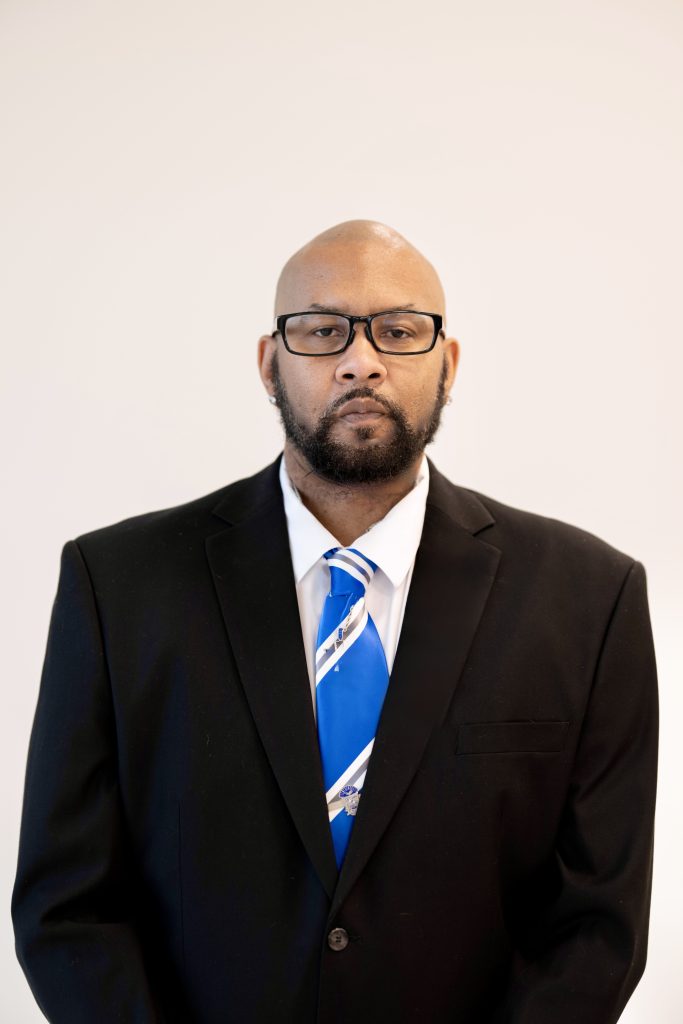
For Allan Sessoms, pursuing a Master of Public Health at North Carolina Wesleyan University is about more than earning another degree. It is about preparing for the work he hopes to do in the communities he cares about.
A Bertie County native and longtime professional with more than 20 years of experience in leadership, operations and problem-solving, Sessoms returned to the classroom with a clear purpose: to build the knowledge and skills needed to eventually establish a nonprofit focused on HIV/AIDS education, advocacy and resource navigation throughout Eastern North Carolina.
“I wasn’t pursuing an MPH just to add letters after my name,” Sessoms said. “I wanted to better understand the challenges facing the communities I care about and gain the tools to become part of the solution.”
Connecting the Classroom to the Community
Sessoms chose NC Wesleyan’s MPH program in part because it allowed him to continue working full-time while pursuing his degree. The program’s Social Epidemiology concentration also aligned with his interest in understanding the social and environmental factors that influence health outcomes.
That connection between classroom learning and real-world challenges has become one of the most meaningful parts of his experience.
During a summer internship, Sessoms worked directly with community members, conducted surveys, identified community needs and developed resources designed to address those needs. The experience allowed him to apply concepts from the classroom, including community engagement, health disparities, social determinants of health and public health planning, to work in the community.
“The internship helped me connect theory to practice,” he said. “It showed me how public health is not just about collecting data but about listening to communities, understanding their challenges, and developing solutions that are meaningful and sustainable.”
The experience has also changed the way Sessoms looks at public health challenges.
Rather than focusing only on the immediate problem, he has learned to examine the factors behind it, including transportation, housing, education, income, employment opportunities and access to resources.
“The program helped me move from looking at individual problems to looking at systems, root causes, and long-term solutions,” Sessoms said.
A Purpose Beyond the Degree
For Sessoms, that perspective is especially important as he works toward his long-term goal of creating a nonprofit focused on HIV/AIDS education, advocacy and resource navigation.
His passion for that work is personal. Living with HIV has given Sessoms firsthand insight into the challenges people can face when navigating healthcare systems, finding support and accessing accurate information and resources.
He hopes to use his public health education, professional experience and community connections to help others navigate those challenges.
“The goal is to help people access information, find support, and know that they don’t have to navigate their journey alone,” he said.
Sessoms also plans to pursue a Doctor of Public Health degree, continuing to build his knowledge and leadership abilities as he works toward making a lasting impact throughout Eastern North Carolina.
It’s Never Too Late to Keep Learning
Returning to school after building a career has given Sessoms a new perspective on lifelong learning.
He credits his NC Wesleyan professors and classmates as some of the most valuable parts of his experience. His cohort has brought together people with different backgrounds and perspectives, while his professors have challenged him to look beyond surface-level problems and consider the broader factors influencing health outcomes.
As a working professional balancing school and other responsibilities, Sessoms knows pursuing a graduate degree requires commitment. But he also believes waiting for the “perfect” time can mean waiting forever.
“Growth often happens in the middle of the chaos, not after it,” he said.
For Sessoms, the journey has reinforced a perspective he plans to carry throughout his career and one that perhaps best captures what he hopes to gain from his NC Wesleyan education.
NC Wesleyan MPH Gains CEPH Applicant Status
North Carolina Wesleyan University (NCWU) is pleased to announce that its Master of Public Health (MPH) program has received approval of its initial application for accreditation from the Council on Education for Public Health (CEPH), the nationally recognized accrediting body for schools and programs of public health.
The application was reviewed and approved during CEPH’s April meeting, granting the NCWU MPH program official applicant status. This designation authorizes the program to advance to the next stage of the accreditation process, which includes completion of a comprehensive self-study aligned with CEPH accreditation criteria.
CEPH accreditation is widely recognized as a national mark of quality and serves as an assurance that public health programs meet rigorous educational and professional standards. Receiving applicant status represents an important milestone toward full accreditation and reflects the program’s progress in meeting CEPH eligibility requirements and demonstrating readiness for comprehensive evaluation.
“This is an exciting step forward for our MPH program and for North Carolina Wesleyan University,” said Dr. Shannon Crowley, Professor of Public Health and MPH Program Director. “Achieving CEPH applicant status demonstrates the strength of our program and our commitment to preparing future public health professionals with the knowledge and skills needed to make a difference in their communities.”
NCWU’s Master of Public Health program is designed to equip students with a strong foundation in public health principles, leadership, research, and applied practice. The program offers specialized concentrations in Physical Activity and Health and Social Epidemiology, distinguishing NCWU as the only institution in North Carolina to offer these MPH focus areas,Accreditationand aligns with the university’s mission to address critical health challenges through high‑quality, community‑focused graduate education.
The MPH program will now begin the formal self-study process and continue progressing through CEPH’s multi-step accreditation pathway.
For more information about NCWU’s Master of Public Health program, visit https://ncwu.edu/academics/graduate-programs/master-of-public-health/.
NCWU Announces New Endowed Scholarship in Public Health

North Carolina Wesleyan University (NCWU) is honored to announce the establishment of the Dr. J. Allen Whitaker Scholarship of Public Health, a newly endowed scholarship created through the generosity of George G. Whitaker in memory of his late father, Dr. J. Allen Whitaker.
The scholarship will support students pursuing degrees in Public Health and will be awarded annually beginning one year after the endowment’s initial investment. The fund has already met the $10,000 minimum required for activation, thanks to a generous gift from George G. Whitaker. Additional contributions are welcome from others who wish to honor Dr. Whitaker’s legacy and further support students in this vital field. The scholarship is designed to be a lasting tribute to Dr. Whitaker’s contributions to the field and his enduring impact on community health.
“This scholarship reflects our family’s deep respect for my father’s life’s work and our shared belief in the power of public health to improve lives,” said George G. Whitaker. “We are proud to support students who are passionate about continuing that mission.”
Administered through the University’s permanently restricted endowment and managed by the Board of Trustees, the fund will provide annual awards based on academic merit and character, with preference given to undergraduate and graduate students pursuing a degree in Public Health. Scholarship recipients will be selected by the University’s Financial Aid Office in partnership with the Public Health faculty.

Dr. J. Allen Whitaker began his career as a public health officer, a field that remained his lifelong passion. Although he went on to practice urology for more than 40 years, his heart was always rooted in public health. This scholarship honors his legacy by investing in the next generation of leaders dedicated to advancing public health. North Carolina Wesleyan University is deeply grateful to the Whitaker family for their vision and enduring commitment to both higher education and public service.
