


Across higher education, recent federal developments have prompted important conversations—particularly among Minority Serving Institutions (MSIs). New guidance and decisions from the U.S. Department of Justice and the Department of Education signal changes to how certain discretionary federal grant programs will operate moving forward. Many of these programs have historically provided mission-critical support to both MSIs and the students they serve.
For many colleges and universities, these shifts raise understandable questions. Federal funding has long played a role in helping institutions expand access, support students through challenges, and respond to workforce needs. When the funding landscape changes, institutions must take a step back and thoughtfully consider what comes next.
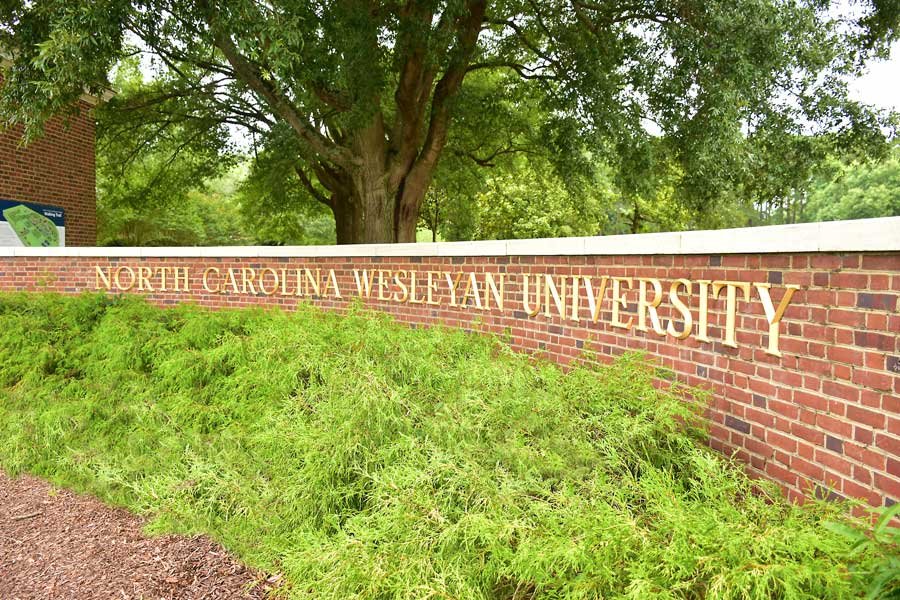
For North Carolina Wesleyan University, a proud Minority Serving Institution, this moment reinforces the importance of planning ahead, diversifying support, and strengthening partnerships that ensure long-term stability for our students and our mission.
“Higher education is constantly evolving, and moments like this remind us that adaptability and community support are essential,” said Dr. Evan D. Duff, President of North Carolina Wesleyan University. “Our responsibility is to continue serving students with excellence, regardless of shifts in the external environment.”
Understanding the Broader Context
Two recent federal actions have contributed to growing discussion within the MSI community:
One involves increased federal scrutiny of certain programs that previously provided targeted support to Minority Serving Institutions. These changes leave many institutions facing questions about the future funding availability and compliance requirements. Another includes the Department of Education’s decision to discontinue specific discretionary grant programs tied to MSI designation.
While these decisions are rooted in legal and regulatory considerations, their ripple effects are being felt across higher education. Institutions that serve large numbers of first-generation students, adult learners, Pell Grant recipients, and students from rural or economically challenged regions must now plan amid greater uncertainty.
As leaders across the country reflect on these changes, a common question emerges: How do institutions continue to deliver opportunity and access when traditional funding streams become less predictable?
What This Means for Minority Serving Institutions
Minority Serving Institutions play a critical role in the higher education ecosystem. They often serve students with significant potential and determination, many of whom balance academics with work, family responsibilities, and financial constraints. Federal support has historically helped MSIs:
- Reduce financial barriers for first-generation students and students from economically challenged households
- Build and sustain academic programs
- Provide tutoring, mentoring, and career readiness resources
- Strengthen workforce pipelines in education, healthcare, business, and public service
When funding becomes less certain, institutions must work harder to preserve these supports. Program growth may slow, student services can feel stretched, and workforce pathways that communities rely on may face added pressure.
At the same time, institutions like NC Wesleyan remain deeply committed to innovation, student success, and regional impact even as they navigate these challenges.
NC Wesleyan’s Ongoing Commitment
North Carolina Wesleyan University has long focused on providing a personalized, practical, and purpose-driven education, particularly for students from central and eastern North Carolina. As an MSI, the University places student potential at the center of everything it does, preparing graduates not only for careers but for lives of leadership and service.
“Our students come to us with ambition, resilience, and a desire to make a difference,” said Dr. Joseph Lane, Provost and Senior Vice President for Academic Affairs. “Our role is to meet them where they are, support their growth, and ensure they have access to the resources needed to succeed.”
Maintaining this level of support in a shifting funding environment calls for new approaches, thoughtful stewardship, and strong relationships beyond federal sources.
Why Private Support Matters More Than Ever
Private philanthropy, whether from individuals, foundations, corporations, or community partners, has always been an important part of NC Wesleyan’s story. Today, it plays an even more critical role.
Private support helps the University:
- Provide emergency and retention funding when students face unexpected challenges
- Create new academic programs and realign existing programs with evolving workforce needs and expectations
- Offer scholarships that reduce financial strain and increase access
- Strengthen career preparation, advising, and student success initiatives
Simply put, philanthropy helps ensure that opportunity does not pause when circumstances change.
In recent years, private philanthropy has played a stabilizing role for many institutions navigating change. Philanthropists such as MacKenzie Scott, who has made significant unrestricted gifts to colleges and universities across North Carolina and beyond, and Bloomberg Philanthropies, which has invested nationally in strengthening nursing and healthcare education, illustrate how private support can reinforce institutional capacity. Similarly, historic gifts like the more than $370 million pledged to Cornell University to endow and name its College of Engineering show how visionary donors can expand research, teaching, and student opportunity at scale across the higher education landscape.
Where Philanthropy Makes a Difference
Support for NC Wesleyan can take many forms, each with meaningful impact:
- Scholarships and endowed funds for first-generation students, adult learners, and career changers
- Program innovation that opens new academic pathways and created opportunities for hands-on learning
- Student success initiatives including enhanced advising, mentorship programs, internships, and practica to foster career readiness
- Community partnerships that strengthen regional education, healthcare, and workforce development
These investments don’t just support individual students, they strengthen families, employers, and communities throughout the region.
Looking Ahead, Together
Federal policy changes serve as a reminder that higher education thrives best when it is supported by a broad and engaged community. For NC Wesleyan, this moment is both a challenge and an opportunity: a chance to deepen partnerships, invite new voices into the conversation, and ensure the University remains strong for generations to come.
“Our mission has always been about opening doors,” Tammy Robinson, Director of Donor Engagement, shared. “With the support of our partners and supporters, we will continue to do just that, creating pathways to success for students and strengthening the communities we serve.”
NC Wesleyan’s students are ready to lead. With stability, opportunity, and shared investment, they will continue to do so—across North Carolina and beyond.
NCWU Announces Transformative Enhancements for 2026
As North Carolina Wesleyan University prepares to welcome a new year, the University is proud to announce a wide range of exciting updates, expanded programs, and student-centered initiatives designed to meet the evolving needs of today’s learners, whether they are recent high school graduates, working professionals, or global scholars. With a renewed commitment to accessibility, innovation, and lifelong learning, Wesleyan is positioning itself as the region’s premier institution for flexible, affordable, and high-impact education.
Empowering Adult Learners Through Expanded APS Offerings
Many working adults don’t realize just how many pathways exist at Wesleyan to elevate their careers, switch industries, or complete a long-term educational goal. Through our Adult Professional Studies (APS) programs, students can choose from 10 flexible degree options, including Nursing (RN to BSN), Business, Education, Leadership, Supply Chain Management, Psychology, Criminal Justice, and more—each designed specifically for busy adults balancing work, family, and life.
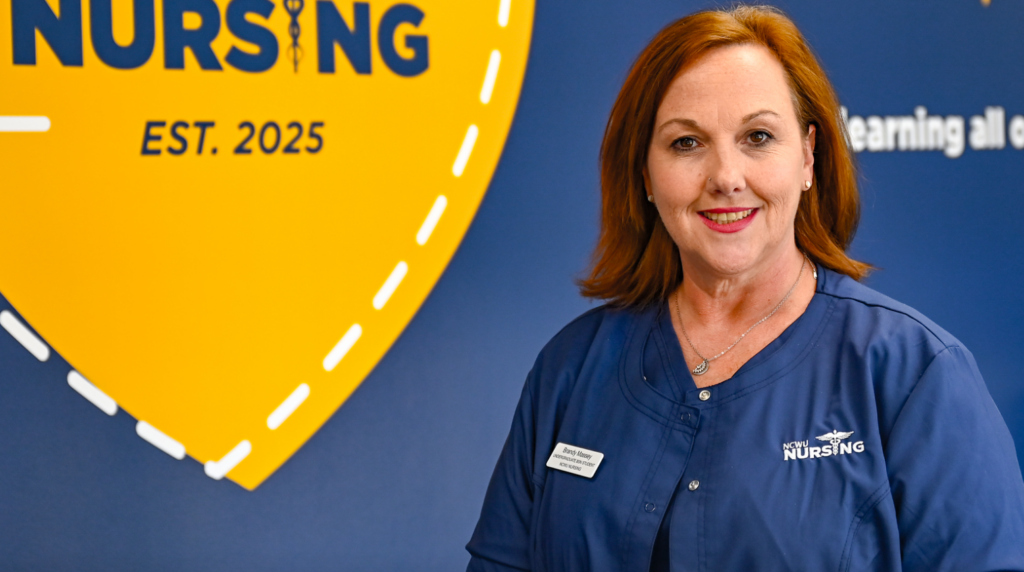
Wesleyan also offers career-boosting certificates that can make an immediate difference in earning potential and workplace advancement. With as few as six courses, certificate completers can gain industry-relevant skills without committing to an additional full degree. These certificate credits can also be applied toward formal undergraduate or graduate degree programs, offering students a flexible pathway to continue their education if they choose. Additionally, the learning outcomes from select certificates may qualify students to apply or test for specific professional certifications not administered by North Carolina Wesleyan University.
“Many adults assume they need to start over,” said Katie Farrell, Dean of Adult and Professional Studies. “But at Wesleyan, you can upgrade your skills, gain confidence, and increase your value in the workplace in months, not years.”
Affordability: More Possible Than Ever
Another major misconception is that further education is financially out of reach. Wesleyan is committed to breaking that barrier. With scholarships, financial aid, employer partnerships, and personalized financial counseling, most students discover that earning their next credential is far more affordable than they imagined.
New this year is Wesleyan’s Refer-A-Friend Tiered Scholarship Program strictly for Adult and Graduate programs, offering up to $500 per referral with no limit to the number of referrals:
- Completed Application: $50
- Enrolled Student:
- 1st referral: $100 scholarship
- 2nd referral: $250 scholarship
- 3rd referral and beyond: $500 each in scholarship
This program not only rewards current students but also empowers them to actively support friends, colleagues, and family members looking to advance their careers.
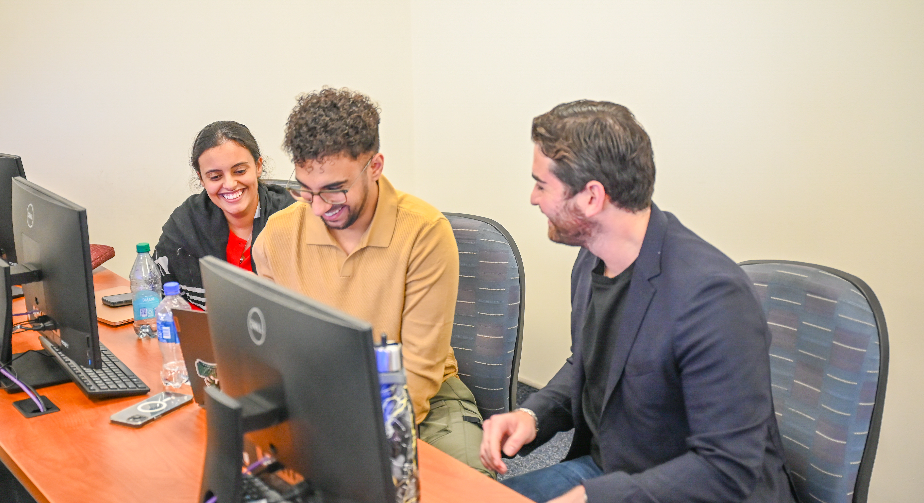
Wesleyan Works: A Seamless Pathway from Community Colleges
Wesleyan continues to strengthen its partnerships across North Carolina with the Wesleyan Works Program, offering guaranteed admission for community college students who complete their associate degree. Participants enjoy Wesleyan benefits from day one, including transfer credit maximization, academic advising, and affordability support – making the transition to a bachelor’s degree smoother and more cost-effective than ever.
Reimagining Student Success for Traditional Students: Introducing the COMPASS Center
In addition to the enhancements for adult and professional students, Wesleyan is elevating the on-campus experience for traditional students by rebranding and relocating the Student Success Center to the Career and Opportunity Mentorship for Personal, Academic, and Student Success (COMPASS) Center.
The COMPASS Center marks a modern, holistic approach to student development. Integrating academic advising, first-year transition programs, leadership training, career readiness, and inclusive learning support, COMPASS equips students not just to succeed in the classroom but to design meaningful, purpose-driven lives.
“Our mission is simple,” Anne Aichele, Program Director, shared. “We want every student to explore, define, and design their academic, personal, and professional journey with confidence.”
Students will gain familiarity with this change when they return in January, but a full launch will take place for the 2026-2027 academic year.
Advancing Global Education: International Services Realigned for Excellence
To strengthen support for Wesleyan’s growing international community, International Student Services will now transition under the leadership of Dr. Oscar Rodriguez. Dr. Rodriguez’s extensive experience with PDSO/DSO operations, along with his bilingual fluency and deep commitment to compliance and cultural care, positions him as an exceptional advocate for global students.
“These enhancements demonstrate our dedication to positioning each department for maximum impact,” said University leadership. “Our priority is always student success – from local adult learners to students joining us from around the world.”
A Call to the Community
As Wesleyan continues to grow, innovate, and serve its region, the University invites local professionals, employers, adult learners, and community members to explore how Wesleyan can support their next chapter. Whether you want to advance in your career, change fields, finish a degree, or simply open new doors, there’s a place for you at Wesleyan—and we’re ready to help you begin.
In return, we welcome our community to partner with us in shaping the next generation of talent. Local businesses and organizations can make a powerful impact by offering internships, job-shadowing experiences, course-based project collaborations, mentoring opportunities, guest speaking, and other forms of professional engagement. These partnerships not only strengthen Wesleyan students’ real-world readiness, but also help employers build strong pipelines of skilled, motivated graduates who are eager to contribute to the regional workforce.
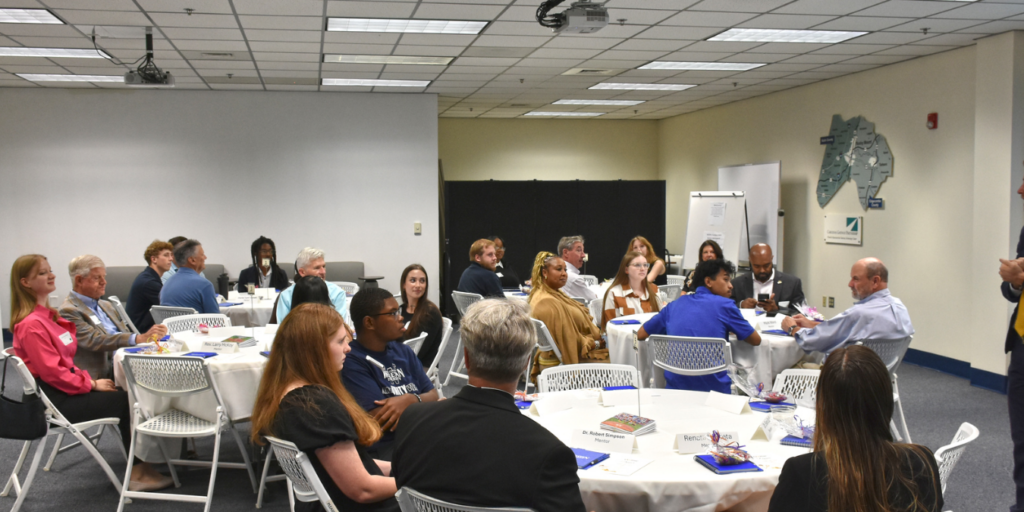
Together, we can build a stronger, more connected community—one where education and opportunity thrive side by side.
Whether you want to advance in your career, change fields, finish a degree, or simply open new doors, there’s a place for you at Wesleyan, and we’re ready to help you begin.
Interested in learning more?
Visit our website or contact our admissions team to explore programs, certificates, scholarship opportunities, and upcoming enrollment dates.
Station 4 Embraces Bishop Branding
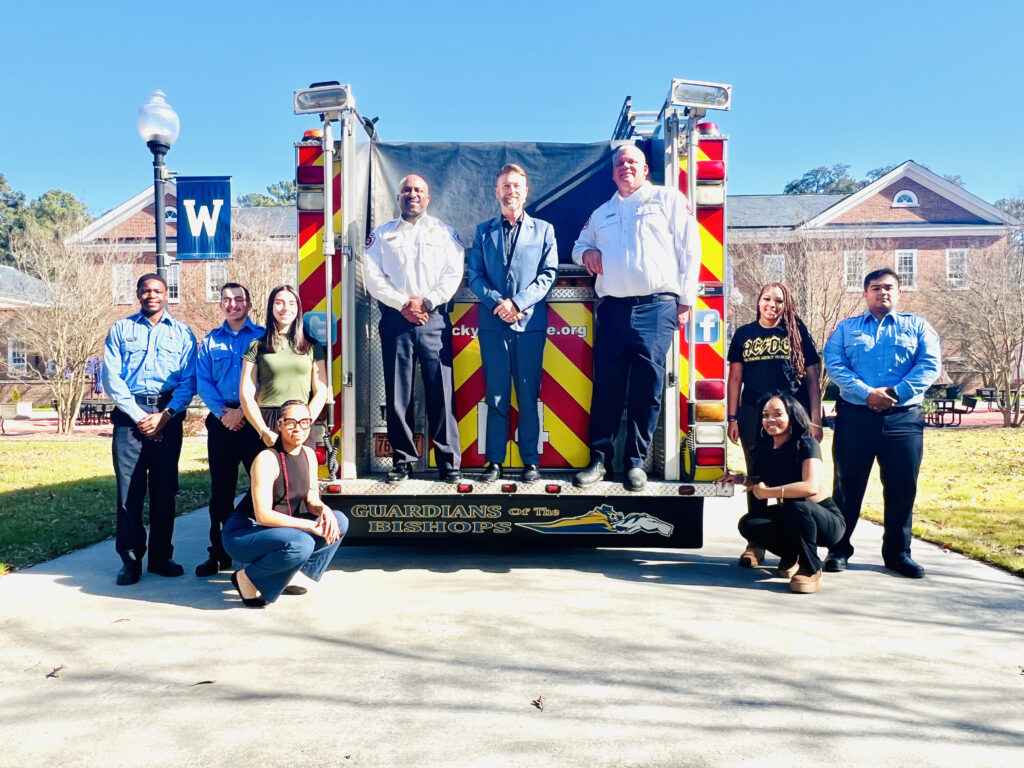
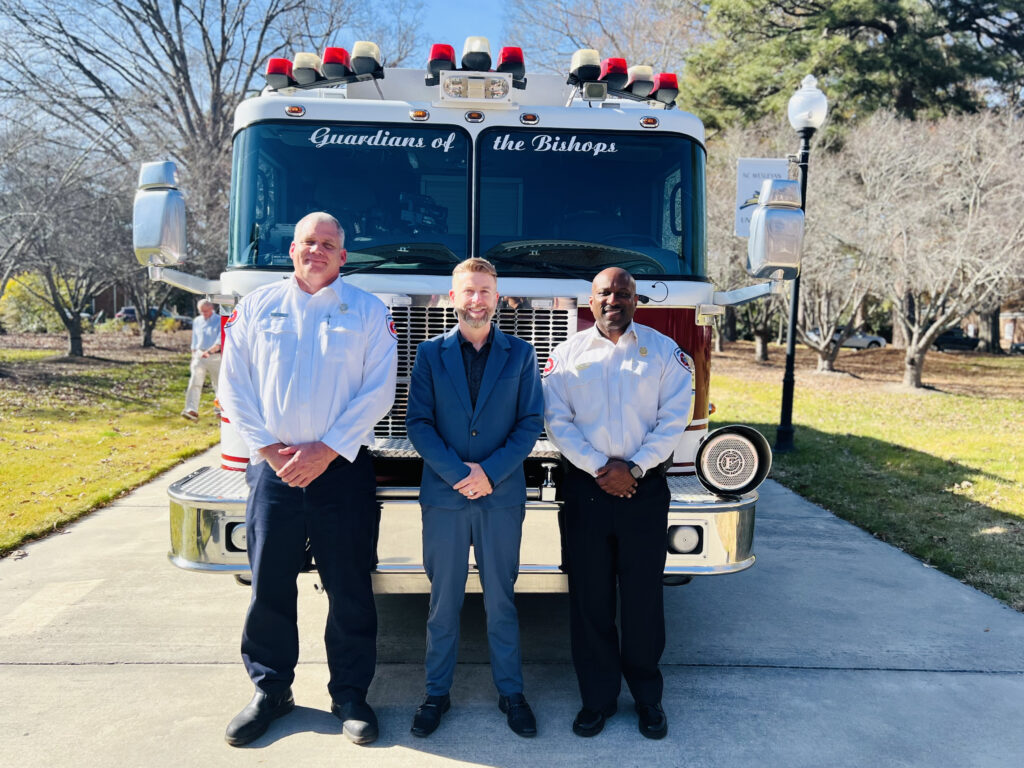
In a powerful celebration of community and school spirit, Rocky Mount Fire Department’s Station 4 has partnered with North Carolina Wesleyan University (NCWU) to proudly brand their firetrucks with a unifying theme: “Guardians of the Bishops.” When challenged to choose a theme reflecting something meaningful in their area, the station found its inspiration in the heart of Wesleyan.
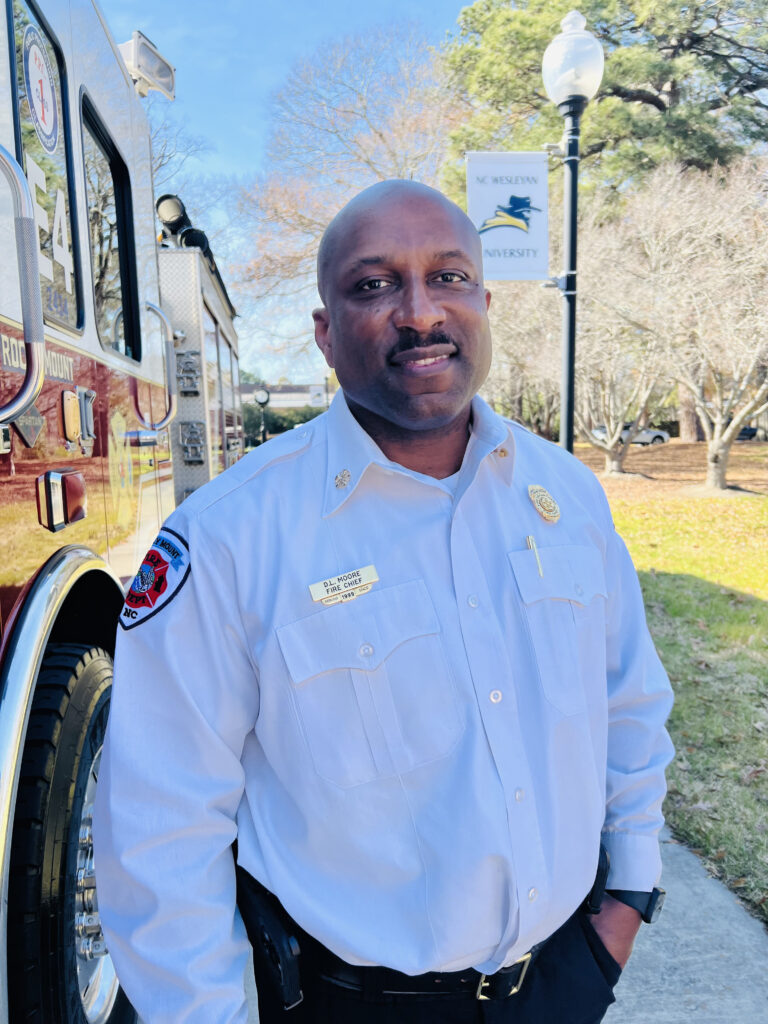
The partnership is more than a creative design. Station 4 has fully embraced its role as protectors of the campus and community. Firetrucks now display the “Guardians of the Bishops” motto on their windshields, while axes and tools are painted in Wesleyan’s signature navy and gold. The latest touch—a custom mud flap at the rear of the truck—completes the transformation, turning essential equipment into a living symbol of pride and unity.
For Fire Chief Darvin Moore, this connection is deeply personal. A proud NCWU Class of 2016 alumnus, Moore’s Wesleyan roots run deep, making this partnership a true reflection of his journey.
The students couldn’t be more excited to see their local heroes embrace the Battling Bishop spirit. What began as a branding project has grown into something far greater—a visible bond of support, community, and shared pride that strengthens both the campus and the city it calls home.
NCWU – A Premier Community College Partner
North Carolina Wesleyan University (NCWU) continues to strengthen its reputation as a premier community college partner in the state, offering a seamless and affordable pathway to higher education for community college graduates and employees. With a steadfast commitment to accessible education and comprehensive student support, NCWU has built meaningful partnerships with community colleges that facilitate smooth transitions for students pursuing their bachelor degrees.

Over the past decade, more than 2,000 community college students have successfully completed their bachelor’s degrees at NCWU, reflecting the University’s dedication to fostering educational advancement. NC Wesleyan maintains articulation agreements with 38 of the 58 community colleges in North Carolina, ensuring that students can transfer credits efficiently. Additionally, Wesleyan is part of several key articulation agreements, including the Independent Comprehensive Articulation Agreement (ICAA) and Registered Nurse (RN) to Bachelor of Science in Nurse (BSN). These partnerships reduce the number of credits students are required to take at a four-year institution, streamlining the transfer process and saving both time and money.
Wesleyan’s transfer-friendly policies set it apart from other institutions in the state, as it offers more transfer credits than any other North Carolina school. Students who have previously received college credit from a two-year institution may transfer in up to 75 credit hours and those who have attended a four-year institution up to 90 credit hours. Students can also take advantage of accelerated associate-to-master’s completion programs, allowing them to earn both degrees in just 2.5 years in high-demand fields such as Business, IT Management, and Criminal Justice. These programs are tailored to meet the needs of working adults and are designed to help students gain the skills needed to secure promotions or enter new career paths.
At the heart of NCWU’s transfer initiative is Wesleyan Works, the University’s signature transfer program. Through this program, NCWU has developed effective agreements with community colleges across the state, guaranteeing admission for graduates holding an Associate of Arts (AA), Associate of Science (AS), or Associate of Applied Science (AAS) degree, Associate of Fine Arts (AFA), Associate of Engineering(AE), and Associates in Teacher Preparation (ATP).This ensures that their credits transfer smoothly, allowing them to continue their educational journey with ease. With NCWU’s one-of-a-kind pathway for AAS degrees, students can transfer in a total of 75 semester hours. Benefit – applies for all AAS credits directly towards 120 bachelor’s degree required hours but further reduces remaining credits needed at NCWU by allowing the additional 15 hours.
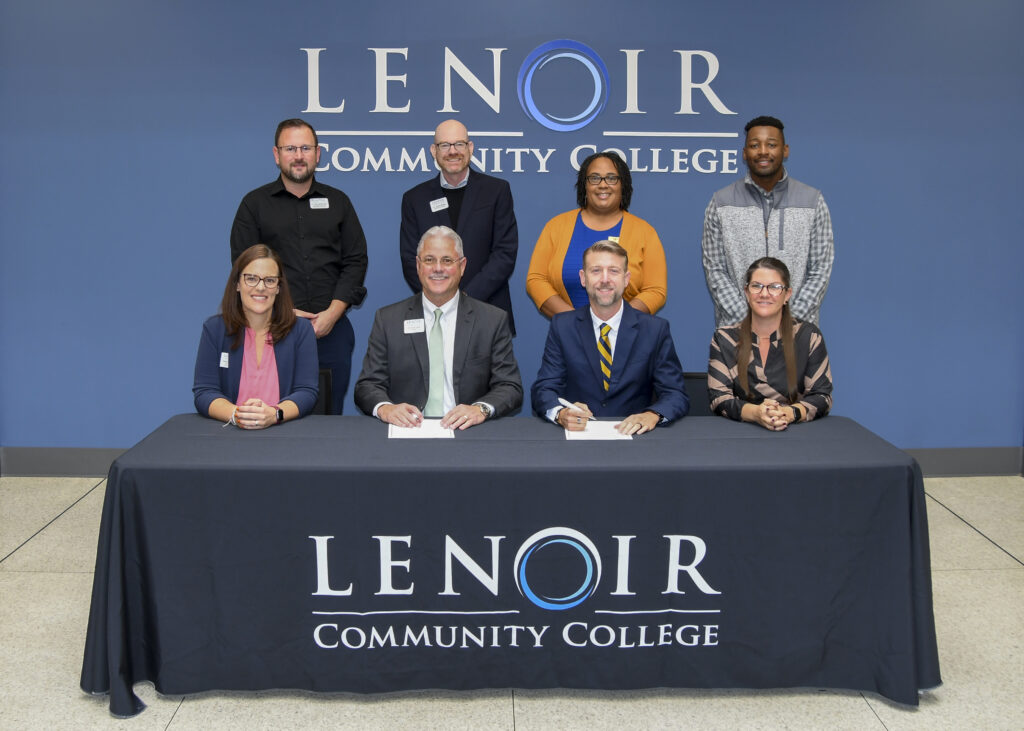
“North Carolina Wesleyan University is committed to supporting community college graduates and employees through flexible, affordable programs that help students reach their full potential,” said Dr. Evan D. Duff, President of NCWU. “We understand the unique challenges faced by community college students and aim to offer programs that fit their needs and schedules, allowing them to balance work, family, and education.”
NCWU not only supports community college graduates, but also extends special tuition rates to community college employees, making it more affordable for them to further their education and advance their careers. The University’s online and hybrid course options provide the flexibility working professionals need, allowing them to complete coursework at their own pace while balancing other responsibilities.
In addition to affordable tuition, NCWU offers a wide range of support services, including academic advising, financial aid counseling, and career services, to ensure that students receive the guidance and resources needed for a smooth transition and successful completion of their bachelor’s degree. These services are offered on their community college campus with dedicated office hours, avoiding the extra step of them having to come to Wesleyan.
As NC Wesleyan continues to expand its partnership with community colleges, the University remains dedicated to providing personalized educational experiences for students from all backgrounds. With a focus on flexibility, affordability, and student success, NCWU is helping build a brighter future for North Carolina’s community college graduates and employees.
Two NCWU Students to Intern at Pfizer
ROCKY MOUNT, NORTH CAROLINA – North Carolina Wesleyan University and Pfizer recently formed a partnership that will provide hands-on learning opportunities to NCWU students majoring in science. Through the work of Dr. Daniel Elias, Assistant Professor of Environmental Science, and Dr. Molly Wyatt, Associate Provost, Pfizer will establish a new student fellowship program beginning in the spring 2023 semester.
“Pfizer’s purpose – ‘Breakthroughs that change patients’ lives’ – is best reflected in the people whom we serve. Our success in achieving our purpose can be accomplished only by finding and cultivating the best talent. Pfizer’s collaboration with NCWU demonstrates both our commitment to our purpose and to community outreach,” stated Kara Price, Ph.D., Vice President, Rocky Mount Site Lead. “NCWU students gain real-world experience, while Pfizer can continue to source excellent talent. It’s a win-win for everyone.”
NCWU students, Rheanna Wilder and Mauro Infante, will be the first two student fellows at Pfizer through this partnership. Rheanna is a senior, women’s soccer player majoring in Biology and Environmental Science. Mauro, a sophomore from Uruguay, is also a student-athlete on the men’s soccer team majoring in Chemistry and Mathematics.
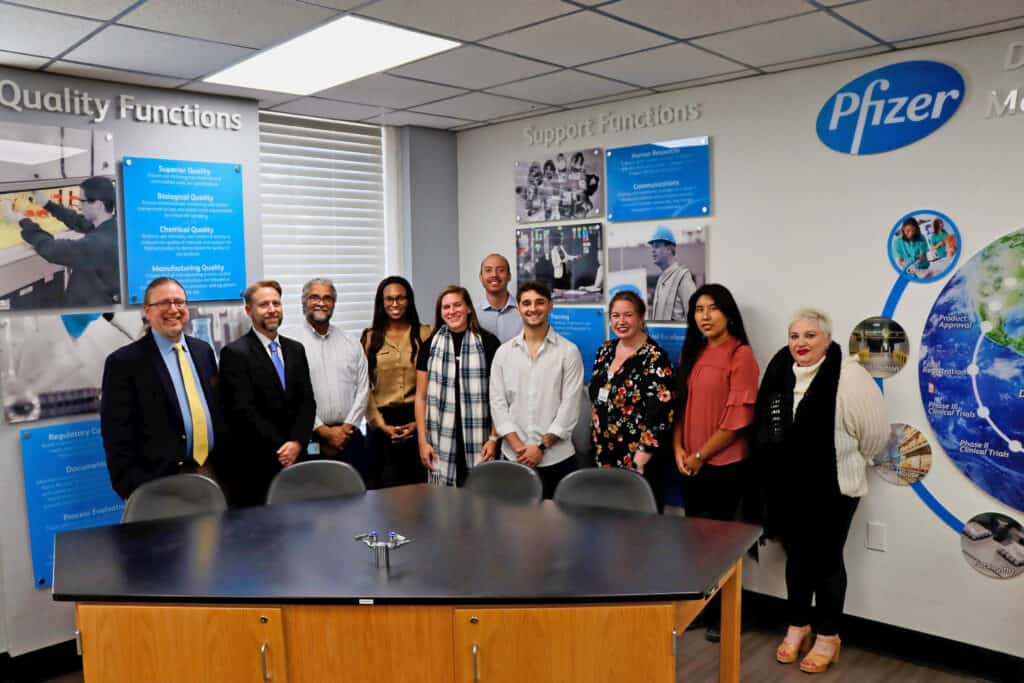
Dr. Joe Lane, NCWU Provost, noted that “This partnership with Pfizer demonstrates the power of Wesleyan’s personal, practical and purpose-driven education. Wesleyan students will have the opportunity to take what they have learned in our lecture halls and labs and apply it to real-world problems with Pfizer’s professionals. We know that Rheanna and Mauro will be the first of many Wesleyan students to build their network and resumés at Pfizer. They will do great work and we look forward to highlighting their experiences.”
During their time at Pfizer, both students will have the opportunity to gain experience in multiple areas. This includes regulatory compliance related activities, Lean/IMEx projects, training and instructional design, science-related laboratory activities, employee performance improvement projects and operational excellence support.
About Pfizer: Breakthroughs That Change Patients’ Lives
At Pfizer, we apply science and our global resources to bring therapies to people that extend and significantly improve their lives. We strive to set the standard for quality, safety and value in the discovery, development and manufacture of health care products, including innovative medicines and vaccines. Every day, Pfizer colleagues work across developed and emerging markets to advance wellness, prevention, treatments and cures that challenge the most feared diseases of our time. Consistent with our responsibility as one of the world’s premier innovative biopharmaceutical companies, we collaborate with health care providers, governments and local communities to support and expand access to reliable, affordable health care around the world. For more than 170 years, we have worked to make a difference for all who rely on us. We routinely post information that may be important to investors on our website at www.pfizer.com. In addition, to learn more, please visit us on and follow us on Twitter at @Pfizer and @Pfizer News, LinkedIn, YouTube and like us on Facebook at Facebook.com/Pfizer.
About North Carolina Wesleyan University
North Carolina Wesleyan University (NCWU) is a small, private Methodist-affiliated institution with a liberal arts-based core curriculum that prepares students for professional advancement, life-long learning and responsible participation in their communities. NCWU offers liberal arts, professional and graduate degree programs for traditional, transfer and working-adult students. The skills cultivated by faculty and built into the curriculum include critical thinking and reflection, communication, collaboration, and information technology. North Carolina Wesleyan University delivers education that is personal, practical and purpose-driven. Personal…through mentoring and the connections that are provided. Practical…by helping students develop lifelong skills. Purpose-driven…by helping them fulfill their purpose in life. With students from all over the United States and more than 40 different countries, the University has immense cultural diversity. To learn more, visit ncwu.edu and follow on Facebook, Twitter, LinkedIn, TikTok and Instagram.
