


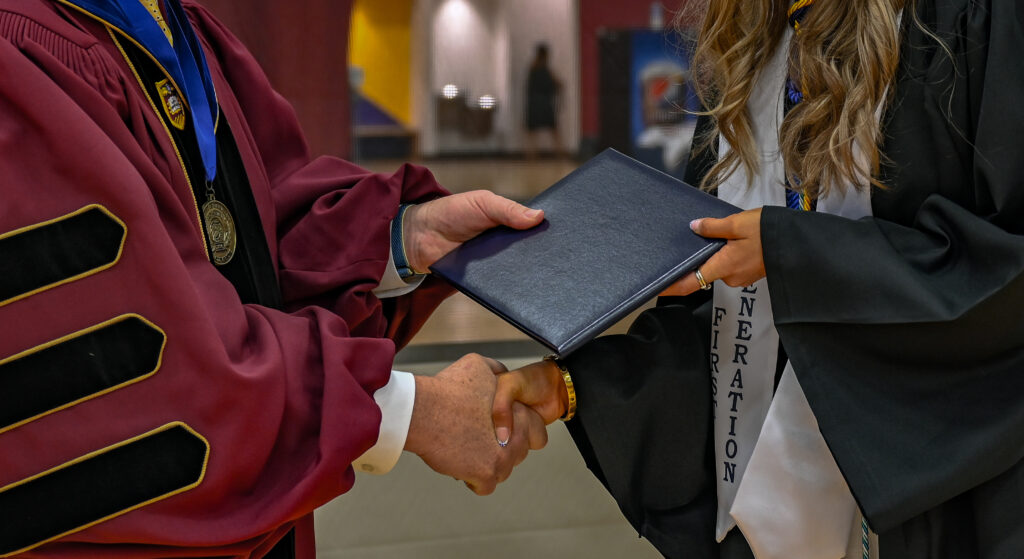
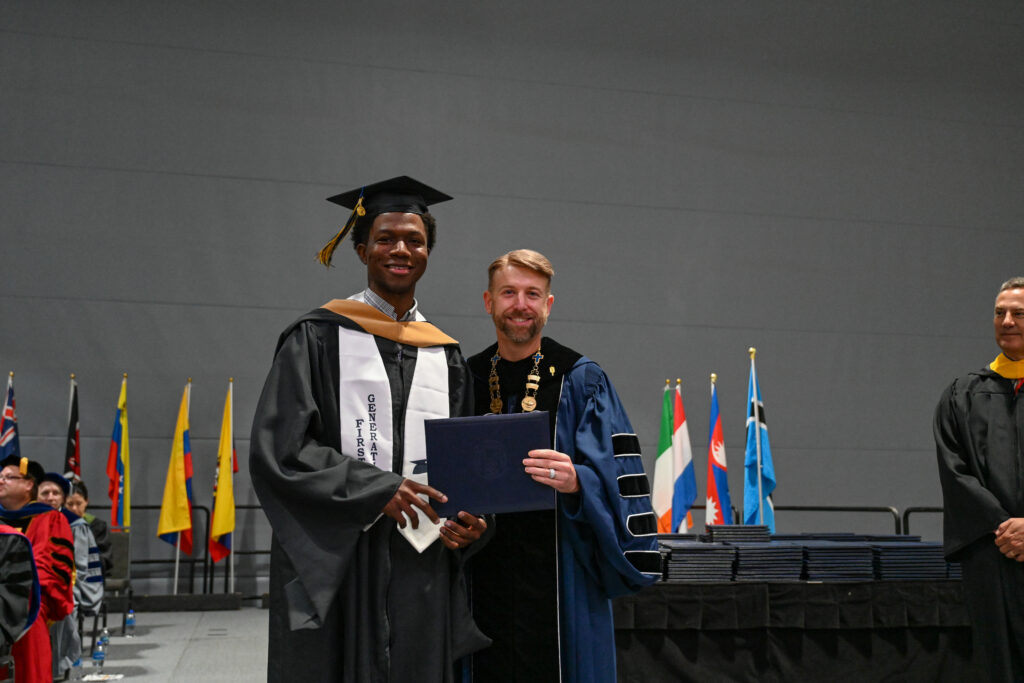
When Matthew Tiller walked across the stage at North Carolina Wesleyan University’s commencement in May 2025, he carried more than his own dreams. As a first-generation college student, he carried the hopes of his entire family.
“Being the first in my family to attend college means breaking a barrier and opening a door that was never there before, “Tiller shared. “It feels like I’ve paved a new way for my family, not just for myself.”
Tiler, who double-majored in English and Psychology, admitted that the journey was not easy. His family, though proud, did not know how to help navigate applications, deadlines, or financial aid. “Honestly, they didn’t really know how to support me, so college became a learning environment for both me and my family,” he said.
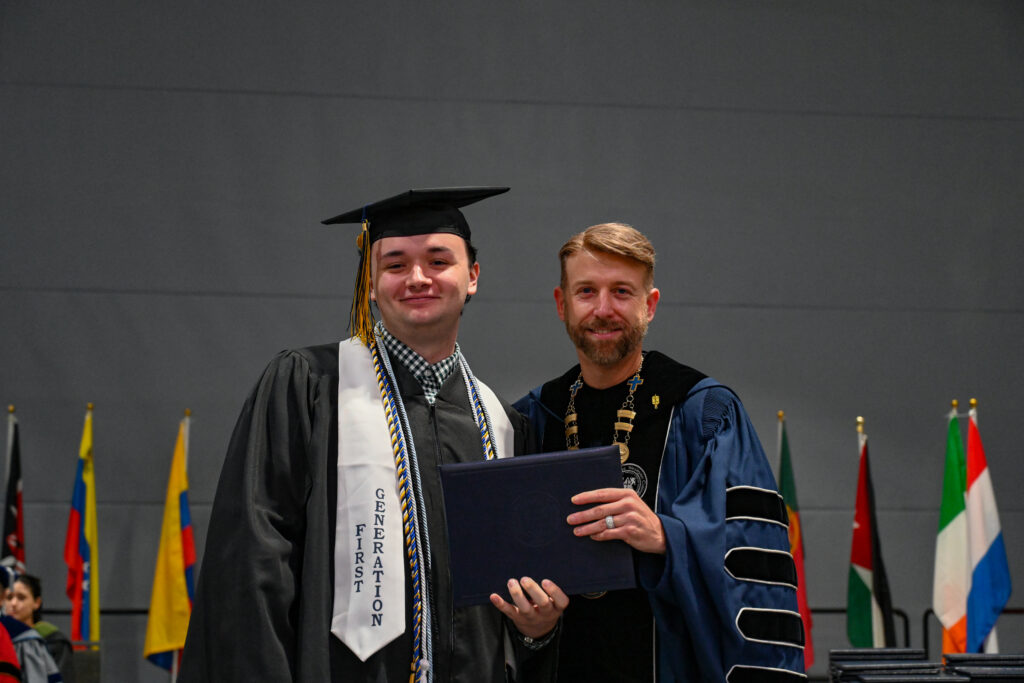
He isn’t alone. For fellow first-generation student Tamiya Rooks, a Biomedical Science major with a focus in Pre-Veterinary Medicine, the experience has also been about perseverance. “For me, being a first-generation college student means that I have managed to beat the odds,” Rooks said. “To my parents, it means that they did an amazing job with raising their children and get to see her grow more. Making them immensely proud.”

At Wesleyan, Tiller found mentors who guided him through. Professors in the English program offered academic and personal support, while supervisors in the Financial Aid office helped him grow into a leader. “Working there was more than a paycheck, it was mentorship,” he said. ‘I know I would not be the leader I am without their guidance.”
Rooks echoed that feeling of support. “Being the first in my family to go to college, I wanted a community that believed in my potential and would give me the resources to succeed, and Wesleyan offered that,” she said.
Faculty and staff play a vital role in this culture. Paige Wells, Director of the Campus Experience, knows the challenges first-generation students face because she lived them herself. “As someone who was a first-generation college student, I fully believe my personal experiences have uniquely equipped me to support students from similar backgrounds with greater empathy and intentionality,” she said. “To me, this work is more than just a job—it’s a personal mission.” Wells also notes that misconceptions about the financial side of college often discourage families. “It’s not because they don’t care—it’s simply a lack of information and familiarity with the process. That’s why it’s so important to create welcoming spaces where students and families feel safe asking questions and getting honest guidance.”
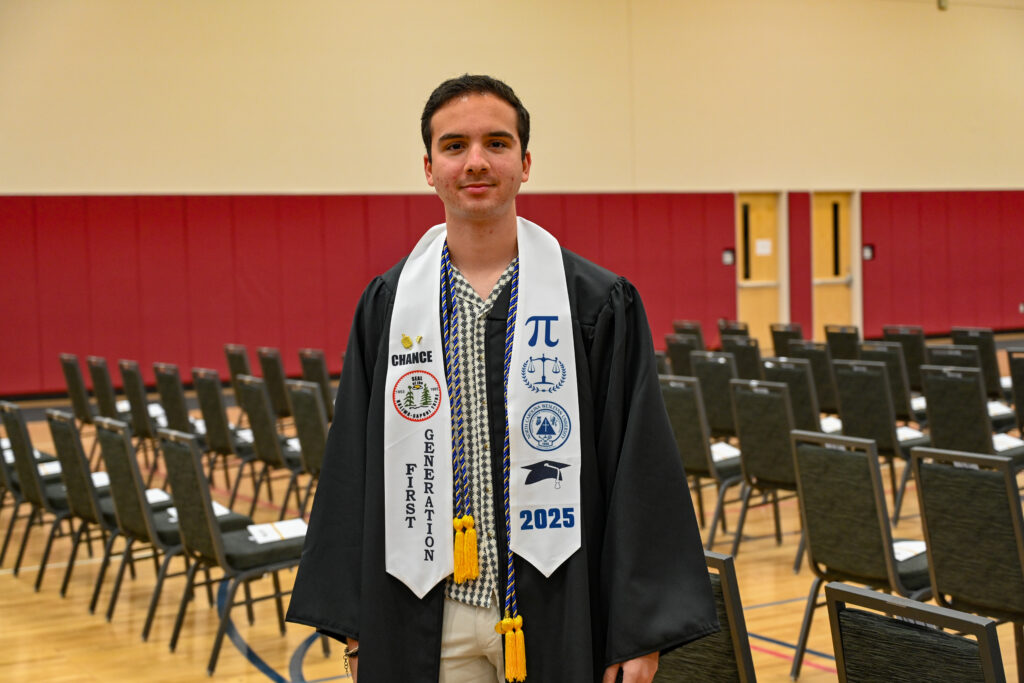
That sense of belonging doesn’t end with graduation. Wesley Mercer, now a Helpdesk Technician at NCWU, once stood where today’s first-generation students do. “I feel like a lot of people are overwhelmed or scared of the idea of going to college. When I first started as a student, the staff and faculty were much more helpful than I originally thought,” he reflected.
Today, Mercer is proud to be part of the institution that helped him succeed. “I am excited that I get to be a ‘piece of the pie’ that is Wesleyan. It is amazing to be on the other side of the institution that meant so much to me as a student. It is almost surreal to see things from the other side.”
For Mercer, the highlight of his journey remains graduation. “Knowing that I finally did it is still my proudest moment,” he said. “Even as a staff member, I always really enjoy getting to go to graduation and seeing students get their diplomas.”
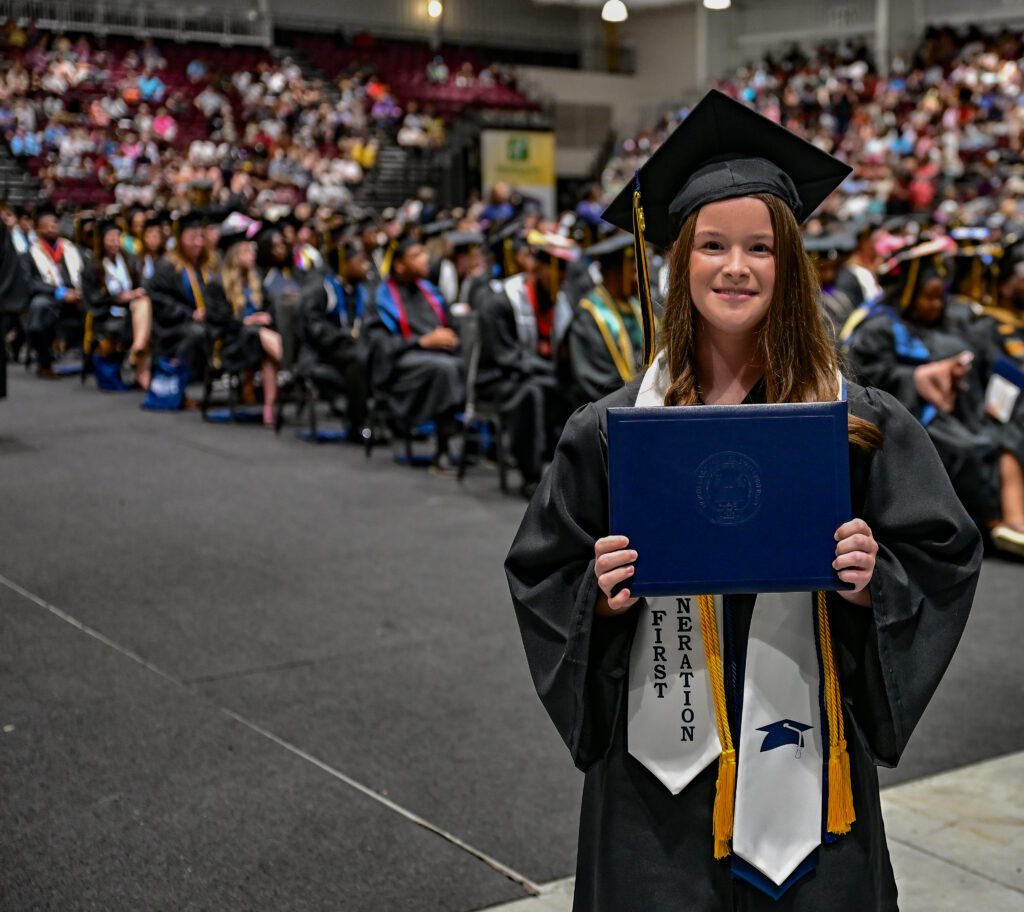
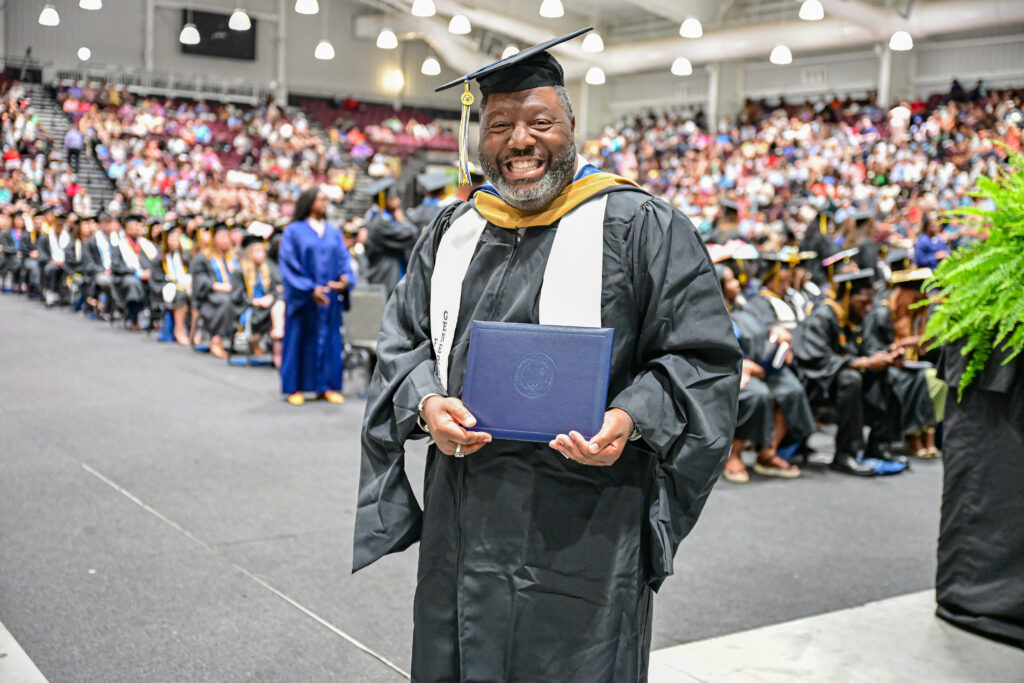
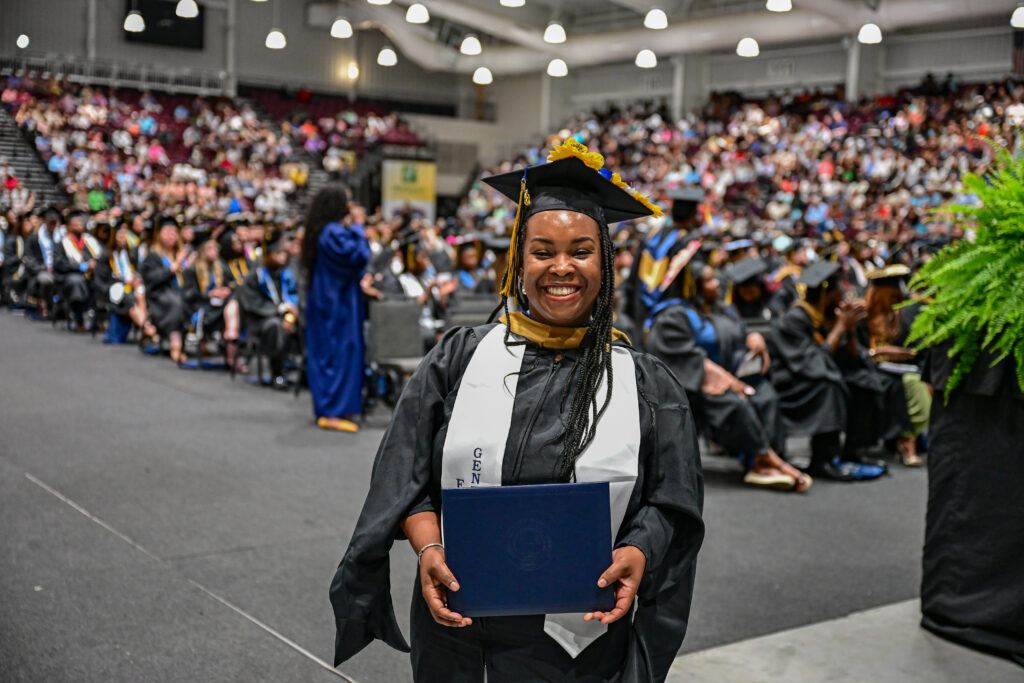
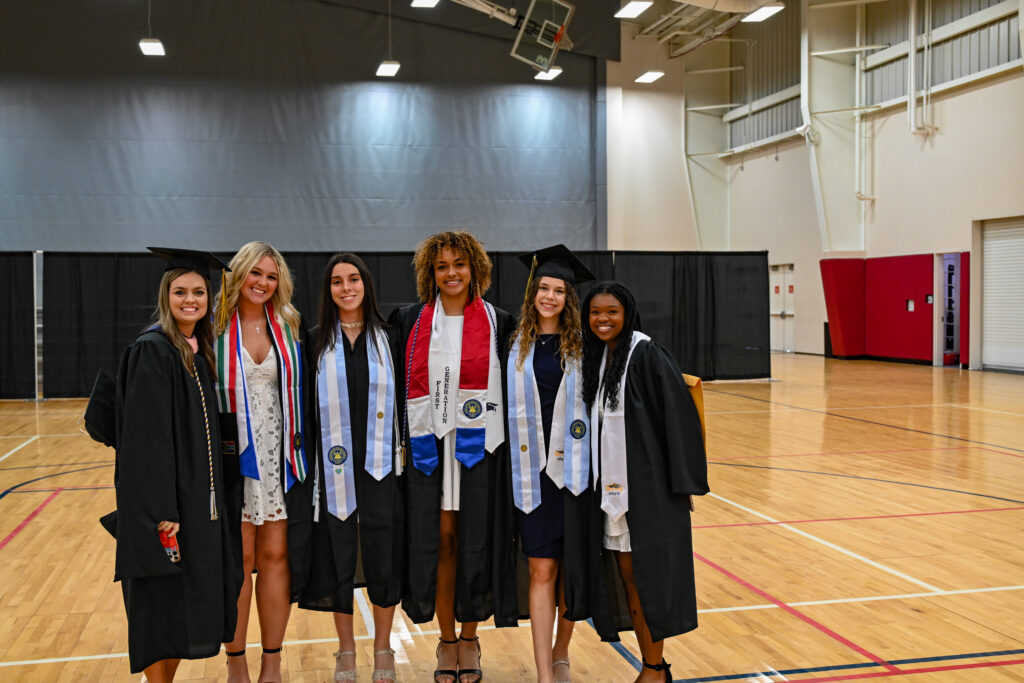
Both Tiller and Rooks admit the challenges were real. For Tiller, it meant forging ahead without a roadmap. For Rooks, it meant leaving home and stepping into the unknown. “Applying to college was the easy part really, but preparing for it was the most difficult,” she reflected. “It’s never easy to leave your home and family to go to a new place, even if it is for your benefit.”
Despite the obstacles, each points to proud milestones. Tiller cites leadership awards and internships. Rooks highlights completing her first year and joining the lacrosse team, something she had dreamed of for years. “I’ve made so many new friends who are really like family to me now, and that means so much,” she said.
Nearly 45% of Wesleyan’s student population are first-generation college students. Many faculty and staff were once first-generation themselves, making them uniquely able to mentor students like Tiller and Rooks. Wells notes that one of the biggest barriers is simply understanding the process. “One of the biggest misconceptions about college is the financial aspect, especially from the perspective of families who haven’t navigated the process before,” she said. “Many families don’t fully understand the true cost of attendance or know what questions to ask when comparing schools, which can unintentionally limit the options they consider. It’s not because they don’t care, it’s simply a lack of information and familiarity with the process. For any student, especially a first-generation student, the process can be overwhelming, and that’s why it’s so important to create welcoming spaces where students and their families feel comfortable and safe asking questions and getting honest, clear guidance.”
Looking ahead, Rooks hopes to become a veterinarian, serving her community by protecting and healing animals. “I want to show my family that dreams can be reached with dedication, and I hope to make them proud by turning my passion into a way to help others,” she said.
Supporting first-generation students is not just part of Wesleyan’s mission. It is woven into the fabric of who the university is. With nearly half its students blazing new trails, every diploma represents resilience, mentorship, and opportunity.
As Tiller puts it: “Take that leap! Do it! Be brave! The challenges are worth it, and you will always come out on top.”
NCWU Building a Strong Incoming Class
ROCKY MOUNT, NORTH CAROLINA – North Carolina Wesleyan University has always been a leader in providing quality education to thousands of deserving students and this coming fall will be no exception. A local student, Natalie Messer, and a legacy, Brayden Blue, are two academically gifted students who will join the incoming Class of 2027 this fall as they embark on their educational journey at NCWU.
Natalie Messer, from Rocky Mount, has accepted the President and Founder’s Scholarships. She plans to major in Biomedical Science: Pre-Veterinary, with intentions to pursue her Doctor of Veterinary Medicine. A senior at Southern Nash High School, Natalie has a 4.22 weighted GPA and is actively involved in various organizations, including Future Farmers of America (FFA) and Winter Guard.
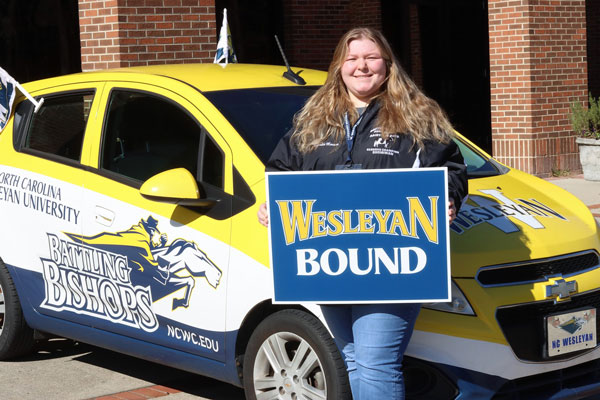
When describing her impression of North Carolina Wesleyan, Natalie stated, “…after my first visit to campus, I was known personally, which made me feel right at home. I fell in love with the beautiful campus which is small, but grand at the same time.”
Natalie attributes the community feel of NCWU to making the impact on her college decision. “Their smaller class sizes with more one-on-one instructional time will help me grow as a person, continue to strengthen my foundation and guide me to my childhood dream of becoming a veterinarian.” She will receive $104,000 worth of University awards over the next four years from North Carolina Wesleyan University.
Coming from Kannapolis, Brayden Blue will be a second-generation Wesleyan student joining the University in the fall. With both parents being alumni of NCWU, Brayden’s father, Bradley Blue, was inducted into the North Carolina Wesleyan University Athletics Hall of Fame in 2017. Brayden, graduating from Concord High School, is a talented basketball player and an accomplished student. Choosing to further his academic and athletic career at NCWU, he will follow his father’s footsteps as a member of the men’s basketball team.
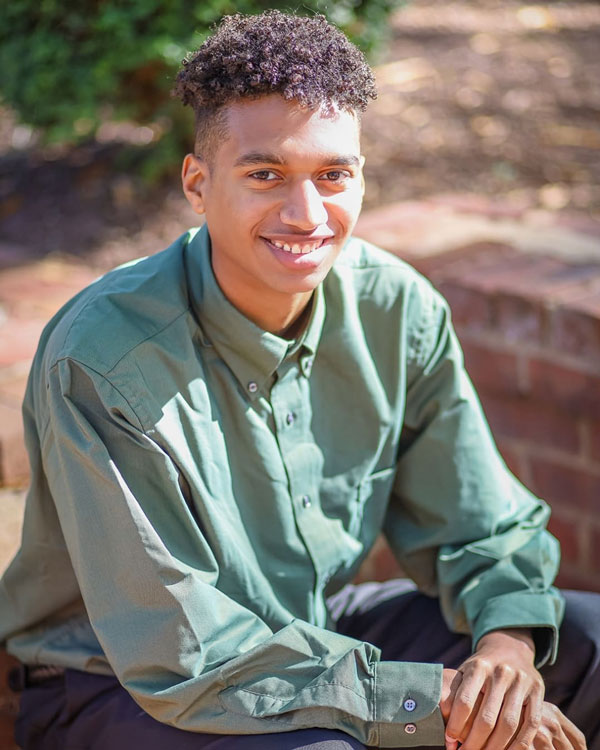
When discussing his excitement about becoming a future Bishop, Brayden replied that he looked forward to “continuing to work on my basketball career while obtaining my degree.” Brayden is already accustomed to the family atmosphere that Wesleyan offers stating, “Coach Thompson is like family and he has followed my basketball career over the years through my parents.”
As students, Brayden’s dad played basketball for Coach John Thompson, while his mom worked as the student manager for the basketball team. Brayden explained his experience when visiting NCWU, “When I came for my first visit, the guys on the team made me feel like I was already part of the family.” Brayden is excited for the many opportunities that NCWU has to offer noting that he is “looking forward to making NCWU my home and seeing what the future holds.” He will receive $60,000 worth of University awards over the next four years.
Natalie and Brayden are only two examples of academically inclined students who have found their personal connection at North Carolina Wesleyan University and plan to join this fall. NCWU looks forward to welcoming such outstanding students into the Battling Bishop family!
About North Carolina Wesleyan University
North Carolina Wesleyan University (NCWU) is a small, private Methodist-affiliated institution with a liberal arts-based core curriculum that prepares students for professional advancement, life-long learning and responsible participation in their communities. NCWU offers liberal arts, professional and graduate degree programs for traditional, transfer and working-adult students. The skills cultivated by faculty and built into the curriculum include critical thinking and reflection, communication, collaboration, and information technology. North Carolina Wesleyan University delivers education that is personal, practical and purpose-driven. Personal…through mentoring and the connections that are provided. Practical…by helping students develop lifelong skills. Purpose-driven…by helping them fulfill their purpose in life. With students from all over the United States and more than 40 different countries, the University has immense cultural diversity. To learn more, visit ncwu.edu and follow on Facebook, Twitter, LinkedIn, TikTok and Instagram and YouTube.
NCWC Recognized for Exemplary Transfer Pathways
Phi Theta Kappa Honor Society (PTK) has named 171 colleges and universities to its 2022 Transfer Honor Roll in recognition of the dynamic pathways they have created to support transfer students.
The Transfer Honor Roll is determined by 40 key metrics related to the support and success of transfer students, including college cost and financial aid, campus life for transfer, admission practices, and bachelor’s degree completion. The Transfer Honor Roll was based on analysis from the National Student Clearinghouse, and on data submitted through the four-year institution’s profile on PTK Connect, Phi Theta Kappa’s online tool designed to help students find their best-fit colleges and career pathways.
Spotlighted at the 2022 American Council on Education (ACE) conference, the Transfer Honor Roll recognizes the importance of creating strong transfer pathways that lead to excellence and success among community college transfer students, and this year’s winners had exceptional outcomes, and several of these included:
• Average percent of transfer in undergraduate population – 60%
• Average bachelor’s degree completion rate among transfers – 77%
• Average credit transferred toward a degree major and/or plan – 91%
• Average percent of transfer students receiving merit-based financial aid – 84%
“This award is so important because it is based on what students tell us they need from their transfer experience,” says Dr. Lynn Tincher-Ladner, President and CEO of Phi Theta Kappa. “We are honored to recognize the colleges and universities working exceptionally hard to create stronger pathways to bachelor’s degree completion for all students.”
About Phi Theta Kappa
Phi Theta Kappa is the premier honor society recognizing the academic achievement of students at associate degree-granting colleges and helping them to grow as scholars and leaders. The Society is made up of more than 3.8 million members and nearly 1,300 chapters in 10 countries, with approximately 240,000 active members in the nation’s colleges. Learn more at ptk.org.
