



At North Carolina Wesleyan University, students are doing more than learning science in the classroom. Under the guidance of Dr. Daniel Elias, Associate Professor of Environmental Science and Environmental Science Program Coordinator, students are conducting original research, publishing their findings in scientific journals, and gaining valuable experience that prepares them for graduate school and careers in science.
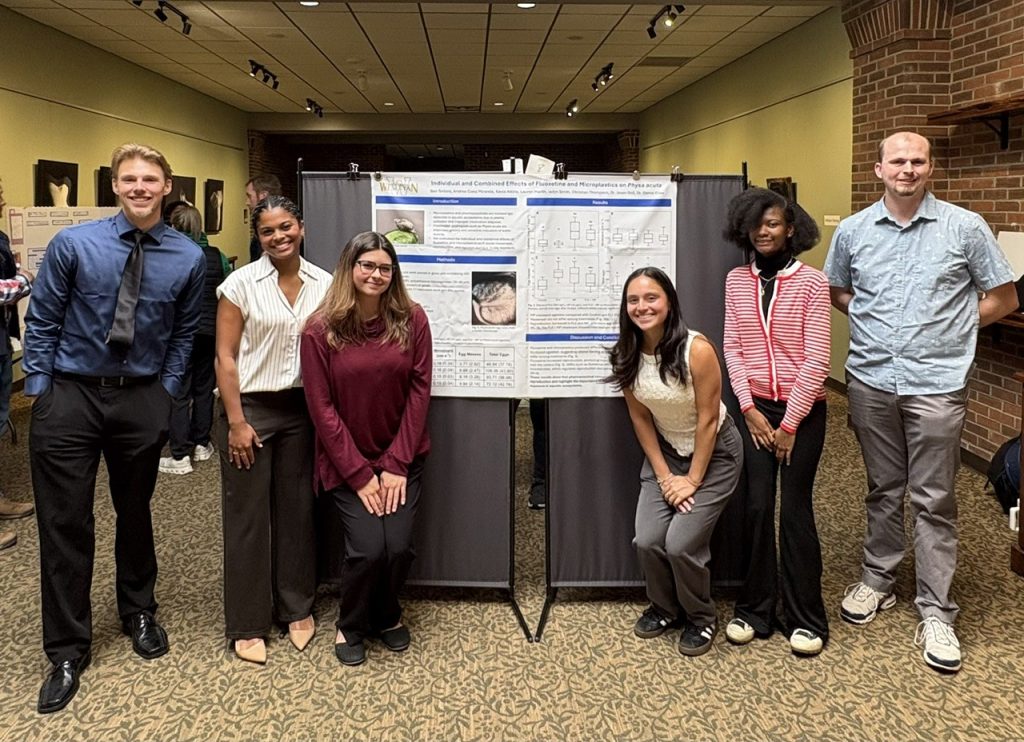
Six NC Wesleyan students, Benjamin Sellers, Andrea Elaez Miranda, Lauren Martin, Jadyn Smith, Kayla Atkins, and Christian Thompson, recently celebrated the acceptance of their research manuscript for publication in Ecologies, a peer-reviewed scientific journal.
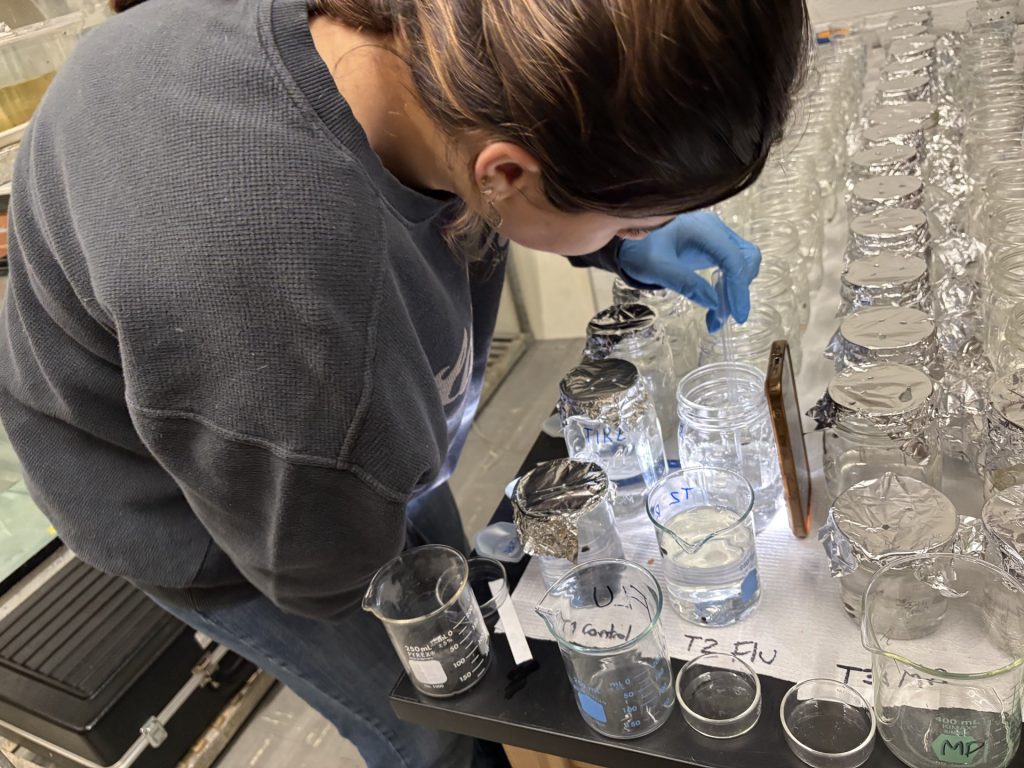
The manuscript, Effects of Fluoxetine and Microplastics on Egestion, Movement, Reproduction, and Positioning under Predator Cue Exposure in Physa acuta, examines how pharmaceutical pollutants and microplastics affect freshwater snails, organisms that play important roles in aquatic ecosystems.
The Research
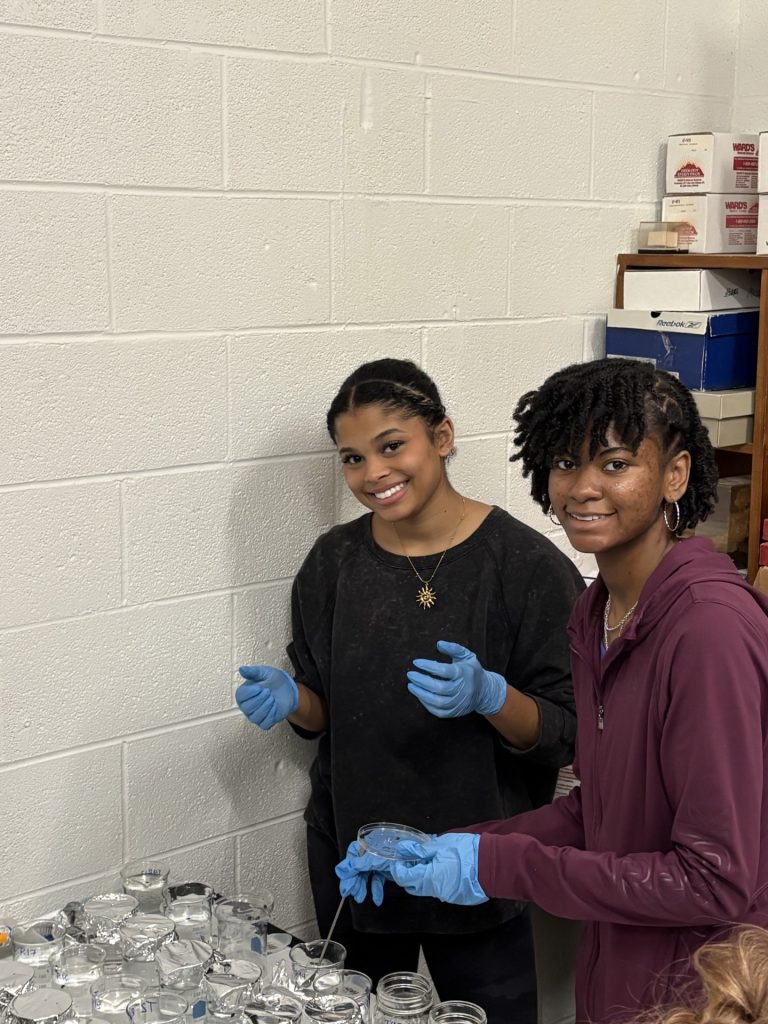
The research was conducted through Environmental Science Lab (Ecotoxicology), a course developed and taught by Dr. Elias that gives undergraduate students the opportunity to design experiments, collect and analyze data, and participate in the scientific publication process. Dr. Jason Doll, a faculty member at Francis Marion University, also collaborated with Dr. Elias and the students on the research.
For the students, the experience offered something beyond a traditional classroom assignment: the opportunity to contribute to scientific knowledge and see their work published for others to read and learn from.
Student Testimonials
“Having our paper published feels like a major accomplishment academically and personally. Being able to contribute to scientific knowledge instead of just reading it represents an important milestone for me,” said Benjamin Sellers.
Sellers also reflected on how the research process taught him to adapt as new information emerged, a skill that will continue to serve him throughout his academic career.
“Working through the experiment, writing the manuscript with my group, and seeing the paper go through the peer-review process helped me learn that the methods, techniques, and writing conventions used may need to be changed at any time to accommodate scientific progress,” Sellers shared.
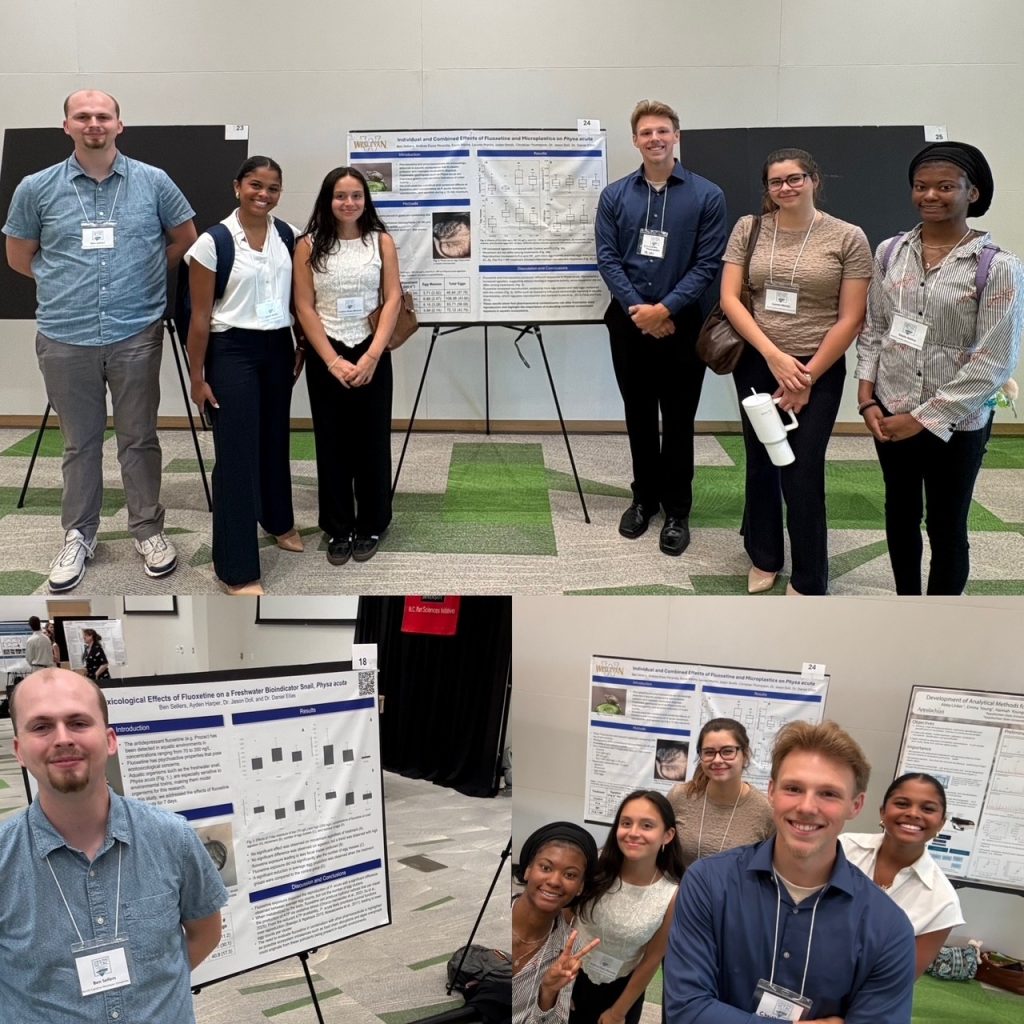
He also credited Dr. Elias for his guidance throughout the project, highlighting his dedication to helping students complete the research within one semester and continuing to work on the manuscript even after several students graduated. Under Dr. Elias’s mentorship, students also developed scientific posters to present at Wesleyan’s Annual Science Symposium and the Carolinas SETAC meeting at NC State.
For Jadyn Smith, seeing the team’s hard work recognized through a scientific publication was an opportunity she never expected to experience as an undergraduate.
“It feels genuinely unreal to have a published manuscript in my undergraduate years. To see all of our hard work be noticed is such an amazing feeling,” Smith said. “I am so privileged to have been given this opportunity and to be able to be involved with such an incredible Environmental Science program that allows us to have this hands-on experience that prepares us for our careers.”
Smith also emphasized the importance of learning to adapt and solve problems throughout the research process.
“There were many times throughout the process where we had to quickly innovate and improvise, and that has prepared me for problem-solving in the future,” she said.
For Lauren Martin, one of the most rewarding parts of the experience was knowing that the team’s work could now reach an audience far beyond the university.
“It is so rewarding that all the hard work and dedication it took to conduct our research and experimentation translated into something that anyone can read and learn about,” Martin shared. “Getting the chance to create a research proposal and following through with it with real testing and results was an amazing experience in itself, but having that experience available to all is doubly rewarding.”
Every time Dr. Elias has taught the Ecotoxicology course, students have participated in research that resulted in a scientific publication. This accomplishment reflects his commitment to providing undergraduate students with opportunities to conduct meaningful research and experience the scientific process firsthand.
These experiences are also helping students pursue advanced degrees. Sellers is currently pursuing a master’s degree in Biology at East Carolina University, while Elaez Miranda is pursuing a Ph.D. in Environmental Engineering at Marquette University. All six student authors are Environmental Science majors or minors.
Innovative Teaching Extends Beyond the Laboratory
The university has even more reason to celebrate. Dr. Elias’s commitment to student learning also extends into his other Environmental Science courses.
A second manuscript, Student Ownership, Systems Thinking, and Scientific Communication, has been accepted for publication in the Journal of College Science Teaching, highlighting innovative teaching activities developed and implemented by Dr. Elias at NC Wesleyan.
The publication focuses on instructional approaches used in two courses, Environmental Science and Global Water Issues. These courses encourage students to take ownership of their learning, examine connections between environmental systems, think critically about complex environmental challenges, and communicate scientific information effectively.
Together, the two publications highlight Dr. Elias’s approach to environmental science education, combining original undergraduate research with classroom activities that encourage students to actively participate in their learning.
For Dr. Elias, the goal is not simply to teach environmental science, but to give students the opportunity to become scientists themselves.
Big Opportunities Start Here
At North Carolina Wesleyan University, students have the opportunity to turn classroom learning into meaningful accomplishments. From contributing to published scientific research to pursuing advanced degrees, these experiences demonstrate the value of undergraduate research, personalized faculty mentorship, and opportunities to put knowledge into practice.
Congratulations to Dr. Daniel Elias, Dr. Jason Doll, and all six student researchers on these outstanding accomplishments!
