


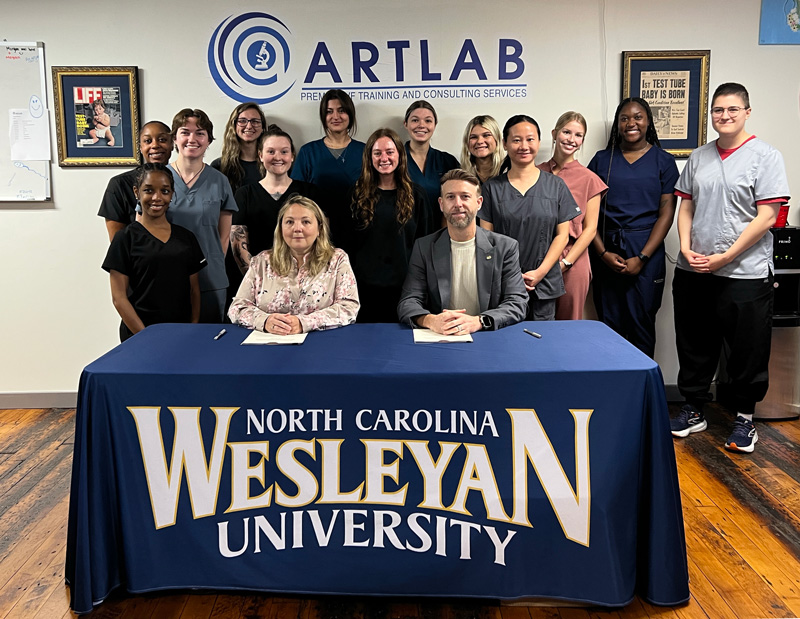
North Carolina Wesleyan University’s new Applied Reproductive Biology Certificate, offered in partnership with ARTLAB IVF Training and Research Center, is already making a national impact. Following the successful launch of its inaugural cohort this summer, the innovative workforce–focused program is attracting students from across the United States and building strong momentum for its next cohort.
The inaugural 10-week certificate program welcomed 11 students representing North Carolina, Texas, Georgia, Indiana, Nebraska, Tennessee, Virginia, and Oklahoma, highlighting the growing national demand for specialized training in assisted reproductive technology (ART).
Dr. Eva Schenkman, Founder and Chief Science Officer of ARTLAB, expressed her gratitude to the inaugural cohort for helping launch a first-of-its-kind educational partnership.
“I want to thank all of you for taking a leap of faith with us and helping establish this program,” said Schenkman. “Your willingness to be part of our inaugural class is laying the foundation for future students while helping address a critical need for highly trained professionals in reproductive medicine.”
The Student’s Perception
Among those students is Courtney Agurs of Charlotte, North Carolina, who began her journey toward becoming an embryologist after earning a bachelor’s degree in biology from High Point University. After discovering the program through TikTok, Agurs said she knew it was the opportunity she had been searching for.
“What excites me most about the program is we are able to be hands-on; we are able to be involved in the process of someone starting their family,” said Agurs. “This is something that is vital to a lot, a lot of people.”
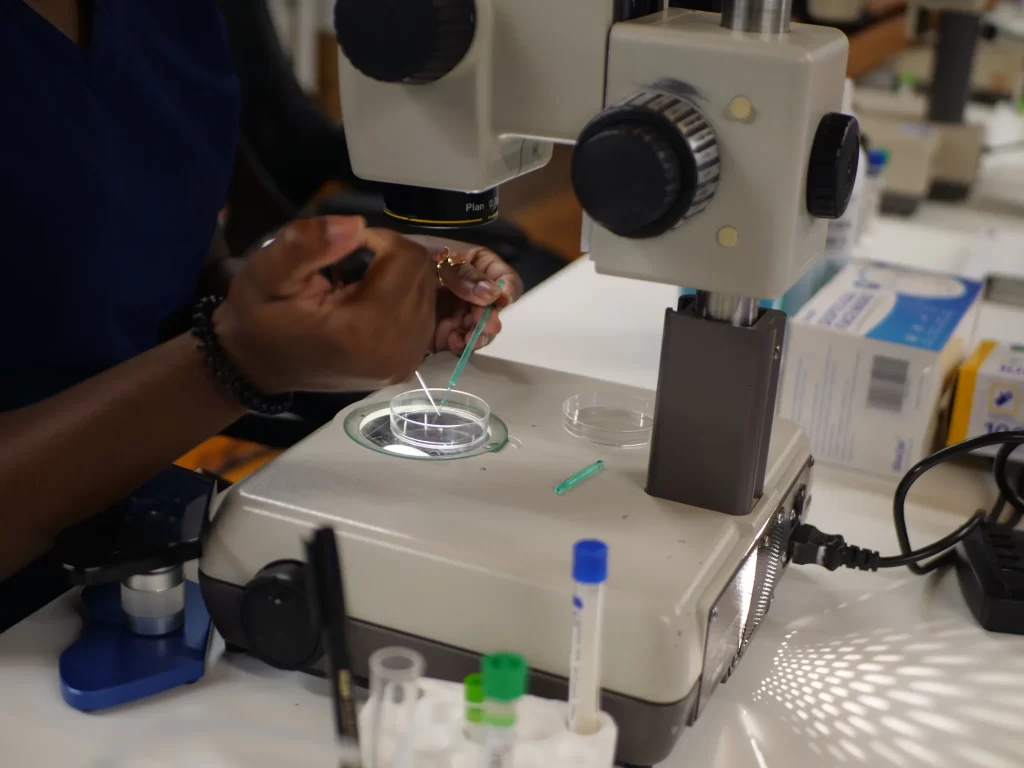
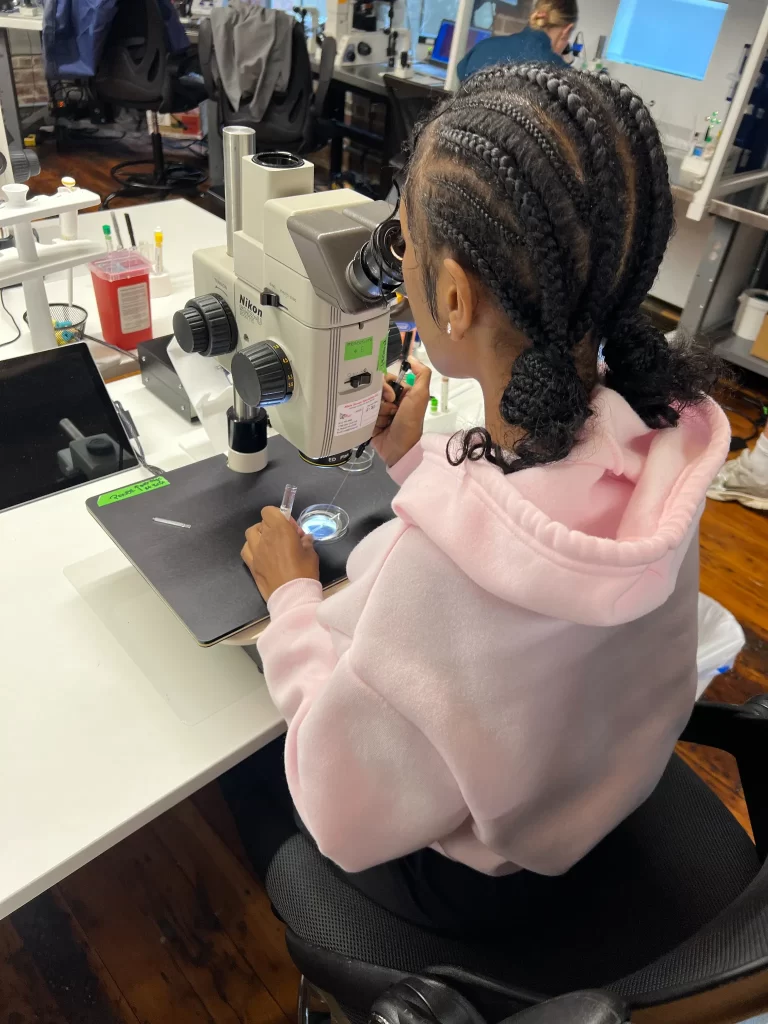
Developed through a first-of-its-kind collaboration between NC Wesleyan and ARTLAB, the world’s largest IVF training center, the Applied Reproductive Biology Certificate addresses the increasing workforce demand for highly trained professionals in fertility and reproductive laboratories. The intensive four-course, 10-week program combines university-level instruction with immersive laboratory training to prepare graduates for immediate employment in assisted reproductive technology laboratories.
Students receive comprehensive instruction in andrology and embryology laboratory procedures through daily hands-on training, faculty-led lectures, and competency-based assessments. Upon successful completion, participants earn 16 post-baccalaureate credit hours and are prepared to sit for the American Board of Registry (ABOR) certification examinations in Andrology Laboratory Science and Embryology Laboratory Science.
For Agurs, the hands-on experience has been one of the program’s greatest strengths.
“Honestly it sounds so simple, but hand control,” she said when asked what has surprised her most about the experience. “We almost have to be like surgeons. Our skill control and hand stability for learning the freezing and thawing of embryos and sperm has been the biggest learning experiences.”
She encourages others with a passion for science and laboratory work to consider the field.
“Do it,” Agurs said. “If you are a person that likes hands-on experience, you have a lot of patience, and you have lab experience, it will carry you far.”
What’s next?
Interest in the program continues to accelerate. The January 2027 cohort already has 16 accepted students, with more than 35 additional applicants currently in the admissions pipeline and new applicants arriving daily. The expanding applicant pool now includes prospective students from California, Pennsylvania, Massachusetts, Texas, and several other states, demonstrating the program’s rapidly growing national reach.
“Seeing students travel from across the country to attend this program affirms the need for accessible, high-quality training in reproductive biology,” said Katie Farrell, Interim Dean of Enrollment. “Our partnership with ARTLAB allows us to provide a unique educational experience that equips graduates with the specialized skills employers are actively seeking.”
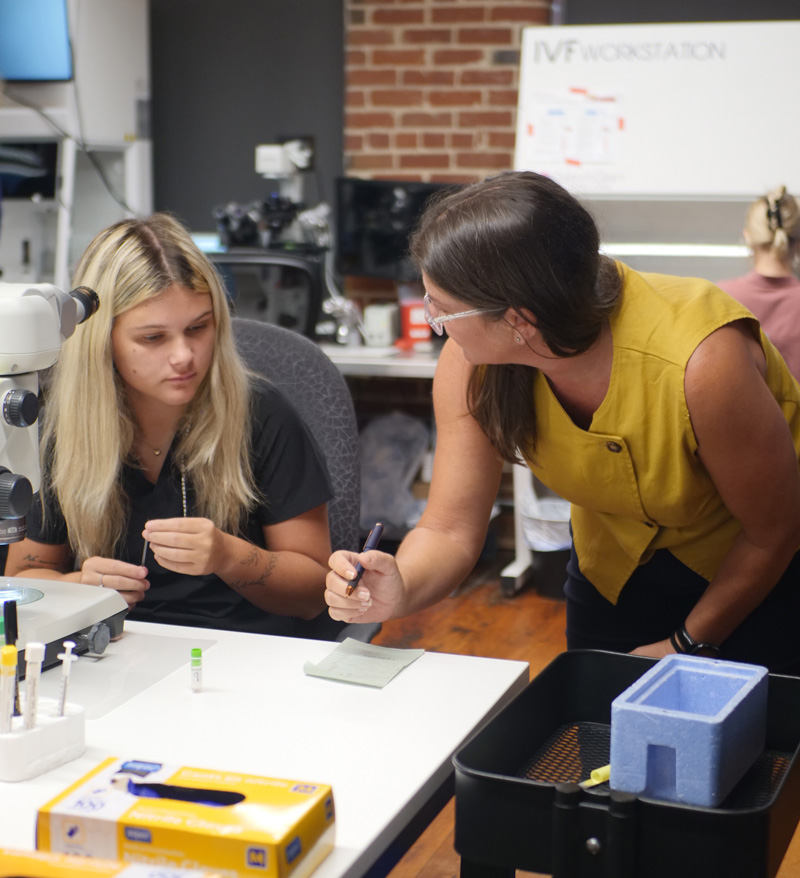
The program was designed in response to the growing need for qualified embryologists and reproductive laboratory professionals as demand for fertility treatment continues to increase. Graduates receive personalized career support, including resume development and employer connections, contributing to an impressive 95% job placement rate within 60 days through ARTLAB’s established training programs.
The Applied Reproductive Biology Certificate is open to qualified post-baccalaureate applicants with degrees in laboratory sciences, as well as NC Wesleyan biology majors who have completed at least 90 credit hours. Students benefit from an immersive educational experience that emphasizes technical excellence, quality assurance, ethical practice, and the professional standards required in modern ART laboratories.
With growing enrollment, expanding geographic reach, and strong workforce outcomes, NC Wesleyan and ARTLAB are establishing the program as a premier destination for advanced reproductive biology education and training.
For more information about the Applied Reproductive Biology Certificate, visit ncwu.edu or contact the North Carolina Wesleyan University Office of Admissions.
NCWU Expands Global Reach Through New Philippines Partnership
North Carolina Wesleyan University (NCWU) has strengthened its commitment to global education through a newly established international partnership with Benguet State University (BSU) in the Philippines. The two institutions recently formalized their collaboration by signing a Memorandum of Understanding (MOU) that will foster academic cooperation, research, cultural exchange, and international learning opportunities.
The agreement establishes a framework for collaboration in academics, research, skills development, and other initiatives designed to enhance the educational experience for students, faculty, and researchers at both universities. Through the partnership, NCWU and BSU will explore opportunities for faculty, researcher, and student exchanges, as well as the sharing of academic resources through both in-person and virtual formats.
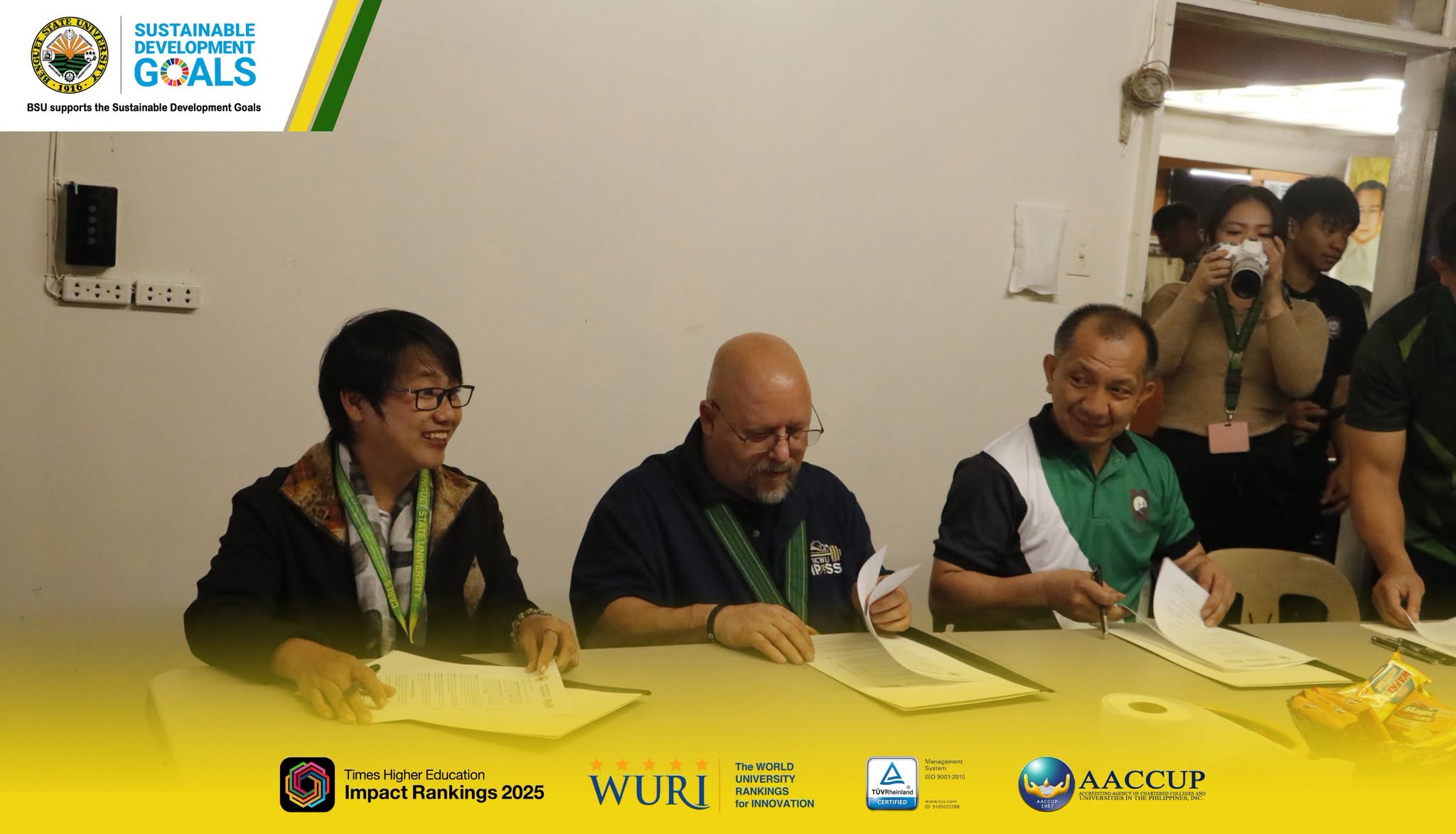
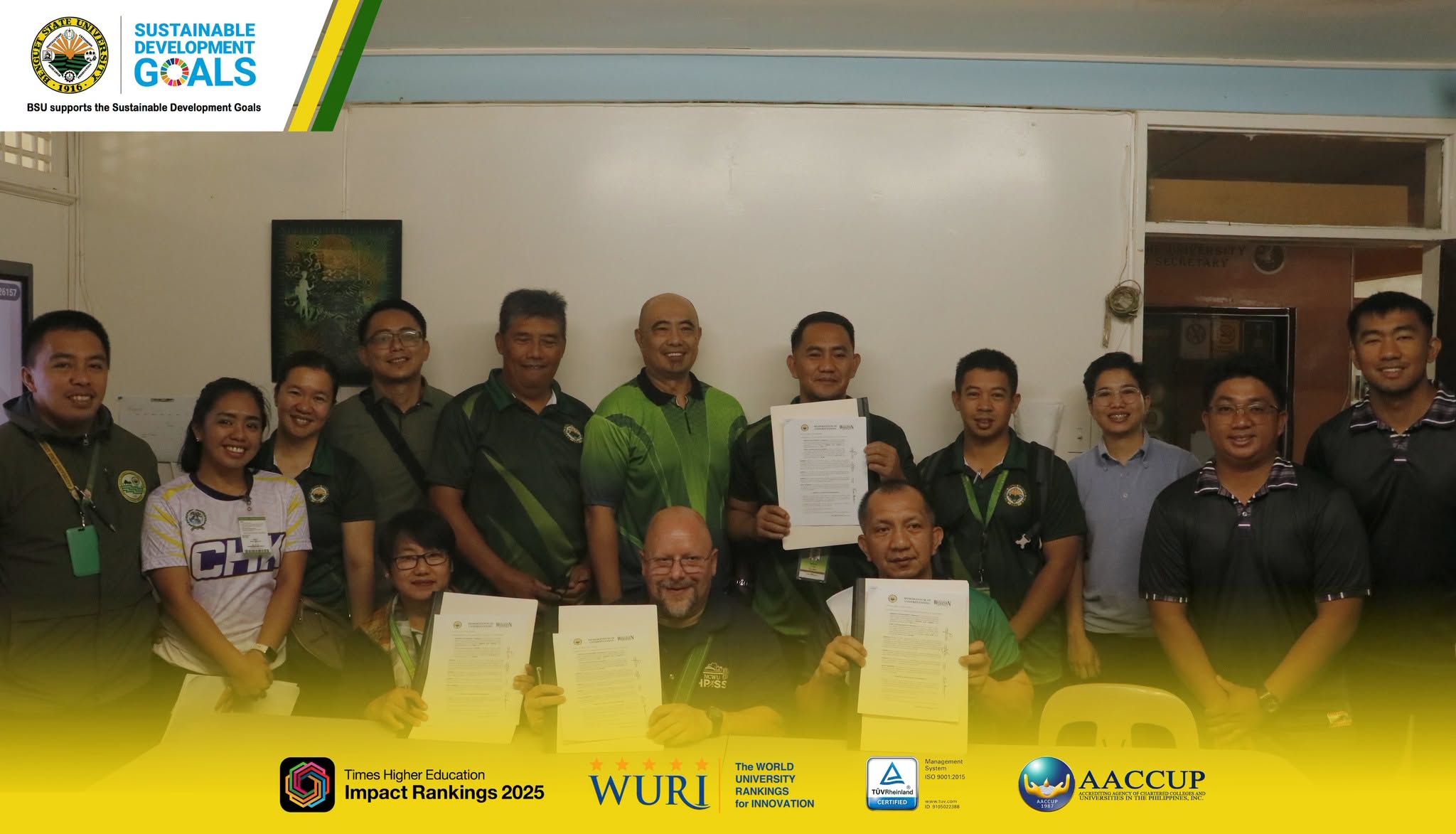
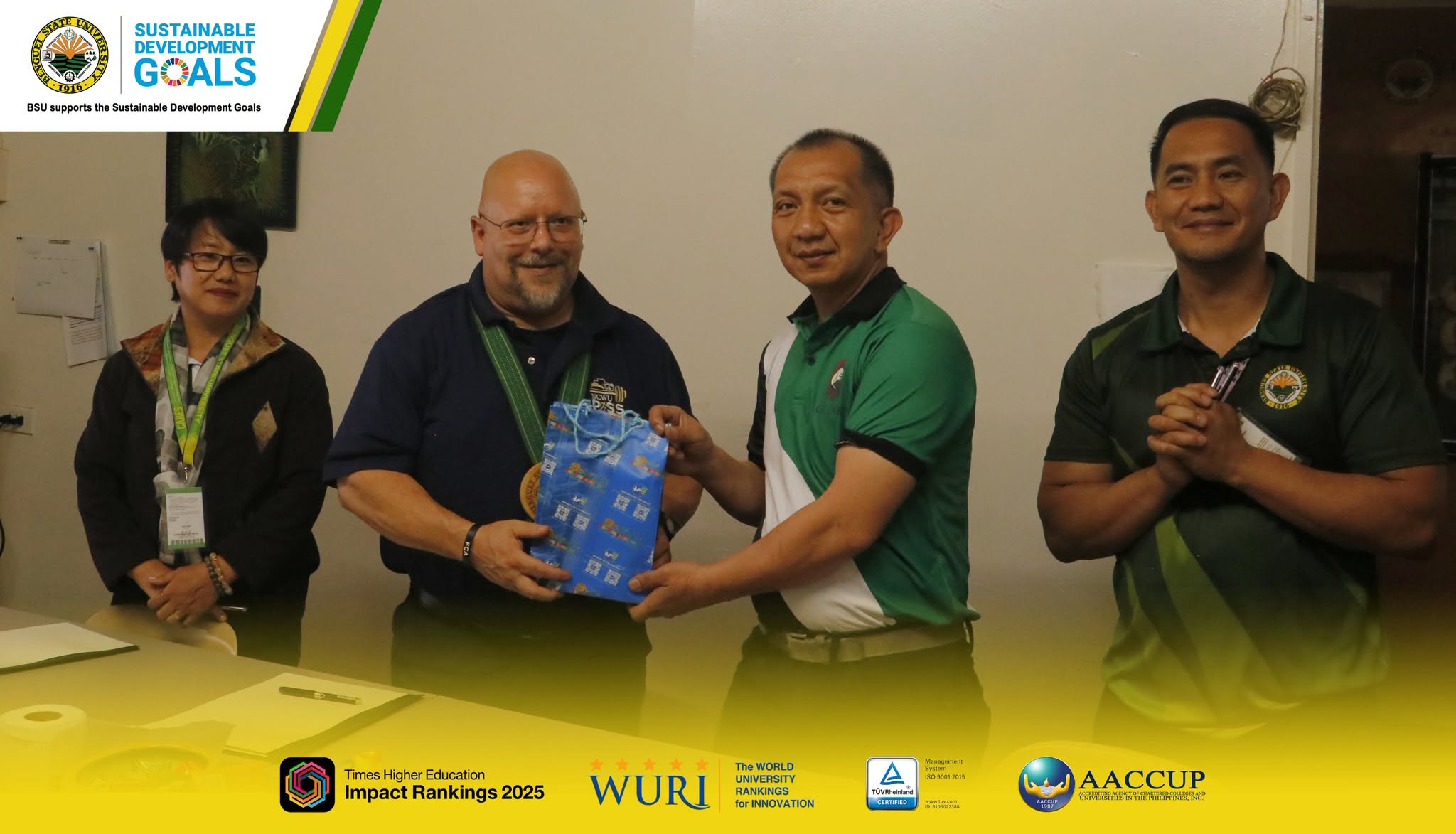
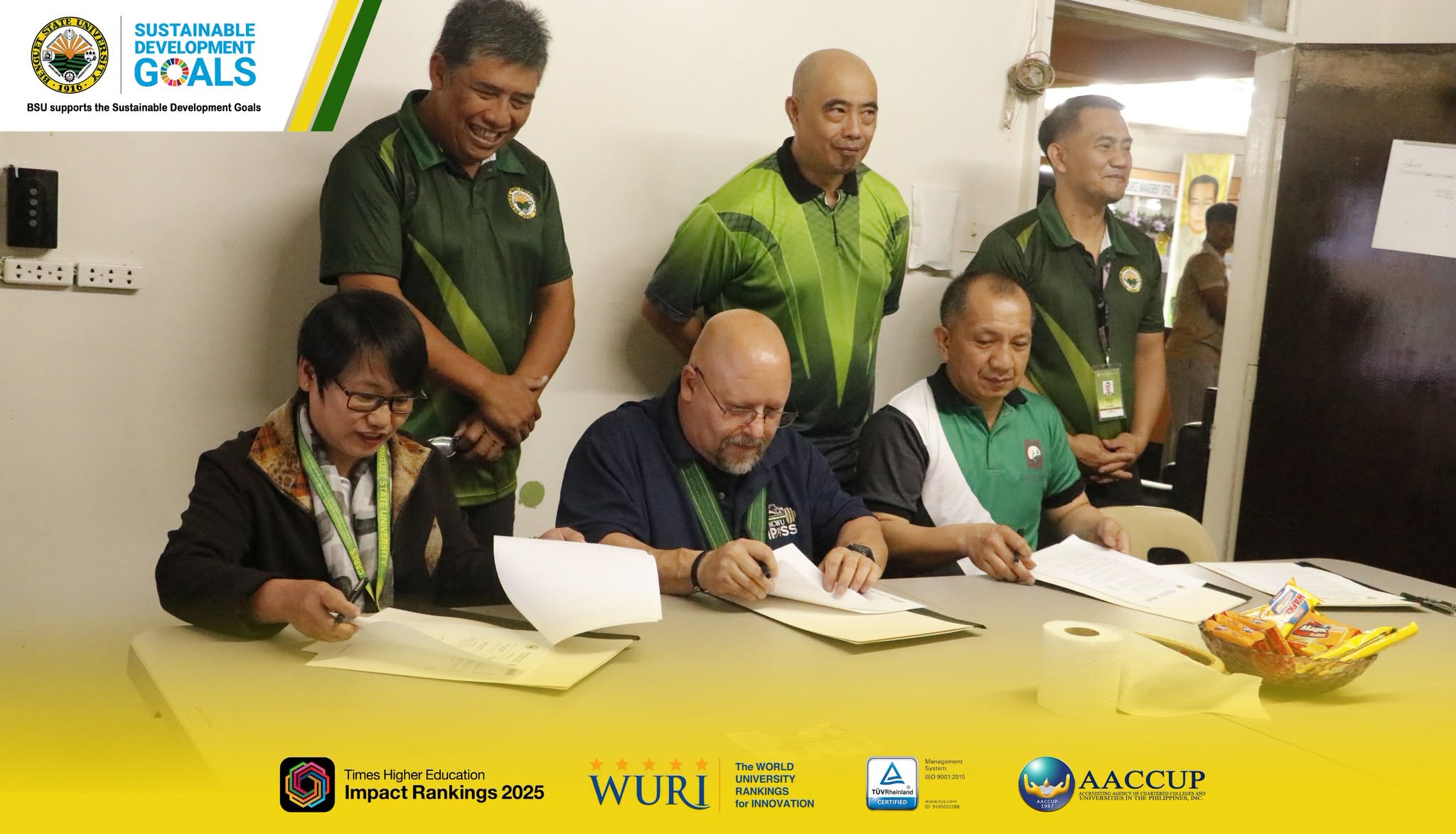
NCWU President Dr. Evan Duff, a signatory to the agreement, was represented at the signing ceremony by Dr. Tim Dornemann, Associate Professor of Exercise Science. During the visit, Dr. Dornemann met with BSU President Dr. Kenneth Alip Laruan to discuss future initiatives that extend beyond the provisions of the MOU, reinforcing both institutions’ shared vision for meaningful international collaboration.
“Our partnership with Benguet State University represents an exciting opportunity to expand the global experiences available to our students and faculty,” said Dr. Duff. “By working together across cultures and disciplines, we can create meaningful educational opportunities, strengthen research collaborations, and prepare our students to thrive in an increasingly interconnected world.”
The discussions provided university leaders with the opportunity to learn more about each institution’s academic programs, strategic priorities, and ongoing developments. The exchange highlighted a mutual commitment to academic excellence, innovation, and international engagement while identifying areas where collaboration can create lasting benefits for both universities.
Through this partnership, NCWU and BSU will combine their expertise and resources to develop collaborative programs that enrich teaching, research, and student learning. The agreement is expected to support joint research projects, academic exchanges, professional development opportunities, and initiatives that promote intercultural understanding and global citizenship.
As North Carolina Wesleyan University continues to expand its international partnerships, the collaboration with Benguet State University reflects the University’s dedication to providing students with transformative educational experiences that extend beyond the classroom and across the globe.
